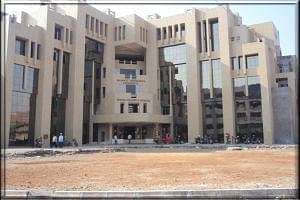
Dental College and Hospital, Navi Mumbai
About
OfficialDental College and Hospital, Navi Mumbai is a other institution in Navi Mumbai. Dental College and Hospital, Navi Mumbai (DCHNM) was established in 1997 as one of the pioneering dental institutions in the Mumbai Metropolitan Region. Situated in the planned township of Navi Mumbai, the college operates under the aegis of experienced dental educators and administrators with decades of clinical and academic experience. The institution is recognized by the Dental Council of India (DCI) and is an approved dental college offering undergraduate and postgraduate dental education at par with national standards. The college houses a modern 200-bed hospital with comprehensive dental treatment facilities spanning prosthodontics, orthodontics, periodontics, conservative dentistry, oral and maxillofacial surgery, and pediatric dentistry departments. The institution maintains strong emphasis on patient care, research, and teaching synergy. The campus in suburban Navi Mumbai provides a conducive learning environment away from the congestion of central Mumbai yet maintaining easy connectivity to employment hubs. Academic Programs: DCHNM offers a 5-year Bachelor of Dental Surgery (BDS) program with annual intake of 60 students. Postgraduate programs include 3-year MDS degrees in multiple specializations including Conservative Dentistry & Endodontics, Prosthodontics, Orthodontics, Periodontics, Oral & Maxillofacial Surgery, and Pediatric Dentistry. The college also offers 1-year diploma programs in dental public health and clinical dental technology. Total student strength hovers around 850 with roughly 380 undergraduate dental students and 280 postgraduate residents across various specializations. Strengths in Clinical Education: Unlike many dental colleges that struggle with patient availability, DCHNM's hospital operates at high capacity with approximately 150-200 daily outpatient visits. This ensures BDS students receive substantial hands-on clinical experience by graduation. The hospital maintains separate departments with dedicated clinics, laboratory facilities, and operation theaters. Advanced equipment includes digital radiography systems, intraoral cameras, CBCT imaging, and laser systems. Postgraduate residents get extensive exposure to complex cases and surgical procedures. Research and Academic Environment: The institution promotes research activities with faculty publications in peer-reviewed dental journals. The college library holds a collection of 8,500+ books, 35+ dental journals, and online access to Pubmed and other databases. Faculty members regularly present research at national and international conferences. The institution conducts regular CME programs and workshops on contemporary dental topics. However, research infrastructure for advanced molecular or biotechnology research remains limited compared to premier dental institutes. Placement and Career Outcomes: BDS graduates predominantly pursue private dental practice (approximately 65%), government dental jobs through examinations like NEET PG (20%), and specialized roles in corporate dentistry or dental product companies (15%). The college maintains placement support through alumni networks and dental association connections. MDS graduates successfully secure positions in dental schools, established clinics, or corporate chains like Apollo, Clove Dental, and Dentzz. Some graduates pursue postdoctoral fellowships abroad, particularly in Middle East countries (UAE, Saudi Arabia, Kuwait) where Indian dental professionals are in demand. The college does not maintain formal corporate placement statistics like engineering colleges, but anecdotal evidence suggests strong employability. Notable Alumni: The college has produced several notable practitioners and academicians. Dr. Rajesh Sharma (BDS 2005) established a chain of successful dental clinics in Mumbai and Pune regions. Dr. Priya Menon (MDS Orthodontics 2012) is recognized for orthodontic training programs and lectures nationally. Dr. Anil Patel (BDS 2003) transitioned to dental public health and works with NGOs in rural Maharashtra. Several alumni hold senior positions in major dental colleges and hospitals across India. Campus Life and Infrastructure: The college operates a modern campus with spacious lecture halls equipped with audiovisual aids, well-maintained preclinical and clinical laboratories, and a dedicated library. Student housing is available but limited (approximately 150 beds); many commute from nearby residential areas or rent accommodations in Navi Mumbai. The campus hosts annual dental conferences, student symposiums, and cultural events. Sports facilities are adequate with a gymnasium, basketball court, and badminton facilities. A common misconception is that dental education is isolating—in reality, DCHNM students actively participate in inter-college competitions and professional societies. Who Should Apply: DCHNM is ideal for aspirants genuinely passionate about dentistry and patient care. The college suits students seeking rigorous clinical training, strong fundamentals, and a path toward either private practice or academic careers in dentistry. Students comfortable in a suburban setting away from central city chaos will find the environment conducive. The college works best for self-driven learners willing to pursue additional certifications or specializations. It is NOT suitable for students viewing dentistry as merely a backup to medicine or those seeking guaranteed corporate package placements typical of engineering colleges. Unique Factors: Unlike many dental colleges that remain confined to institutional practice, DCHNM's hospital operates as a functional tertiary care facility treating thousands of patients annually. This creates authentic clinical learning rather than theoretical exercises. The institution's location in Navi Mumbai, a planned city with developed infrastructure, offers students modern facilities while maintaining reasonable accommodation costs compared to central Mumbai. Faculty-student ratio remains favorable at approximately 1:9, facilitating mentorship. Key Weaknesses: Research infrastructure lags behind top-tier dental schools like AIIMS Delhi or Manipal. The college lacks dedicated research park facilities for advanced studies. International collaboration and student exchange programs are minimal. Postgraduate scholarship support is limited. The institution's growth in recent years has been steady but not spectacular—it maintains quality over aggressive expansion, which some view as lack of ambition. Admission and Entry: BDS admission follows NEET UG scores with state-level cutoffs. Postgraduate MDS admissions occur via NEET PG with subsequent counseling. The college maintains reservation policies per state guidelines (Maharashtra follows central quotas—General, OBC, SC, ST, EWS categories). Admission merit is transparent and follows statutory regulations. Personal interviews typically do not feature in admission process. Fees and Affordability: Annual tuition fees for BDS approximately 230,000-280,000 INR for general category, with significant reduction for SC/ST candidates. Additional development fees, examination fees, and hospital charges add another 50,000-80,000 INR annually. Postgraduate MDS fees are higher at approximately 400,000-500,000 INR per year. Cost remains lower than private dental colleges in metro areas but higher than government dental colleges.