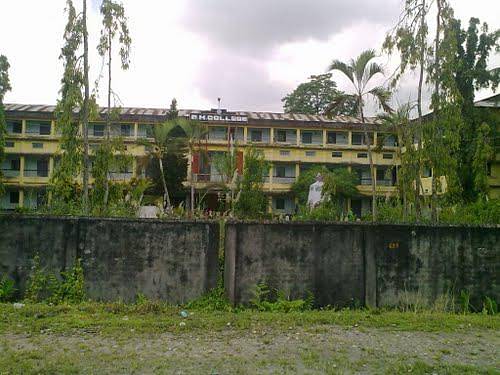
BH College
About
OfficialBH College is a other institution in Barpeta, established in 1966. BH College, established in 1927 as Barpeta High School, evolved into a full-fledged undergraduate and postgraduate institution serving the Barpeta district and neighboring regions of Assam. Located in the suburban area of Barpeta Road, approximately 140 km west of Guwahati, the college has a century-long tradition of providing quality higher education to students from economically diverse backgrounds, with a significant portion coming from first-generation learner families. The institution transitioned from a junior college to a full three-year degree college in 1998, marking a pivotal expansion in its academic portfolio. Today, BH College operates under the affiliation of Gauhati University and serves as one of the more established undergraduate institutions in the Barpeta-Kamrup region. The college offers undergraduate programs across Sciences (Physics, Chemistry, Botany, Zoology, Mathematics), Arts (English, Assamese, History, Political Science, Economics, Geography), and Commerce (Accounting, Economics, Business Studies). Postgraduate programs include MA in English, M.Sc in Chemistry, and MA in Economics. The institution has developed moderate strength in science education, with functional labs in physics, chemistry, and biology disciplines. Research output remains limited, with faculty engagement primarily in teaching-focused activities rather than high-impact research publications. The college library houses approximately 18,000 volumes with limited digital resources, serving as the primary knowledge repository for students. Campus infrastructure includes basic laboratory facilities, a seminar hall, and internet connectivity in academic blocks, though bandwidth limitations affect online learning accessibility. The placement cell operates with limited corporate outreach, primarily engaging with local enterprises and small-to-medium enterprises (SMEs) rather than multinational corporations. Notable achievements include consistent pass rates in university exams and moderate representation in civil service examinations, though these numbers remain below state-level averages for government colleges. The college has produced several administrators, teachers, and social workers who have contributed meaningfully to the region. However, critical infrastructure gaps persist, including inadequate hostel capacity (fewer than 200 beds for a 2,800-student population), limited sports facilities, insufficient computer laboratories, and below-average internet bandwidth. The student demographics are predominantly from lower-middle-class and middle-class families, with Bengali and Assamese students forming the majority. The college is particularly suited for students prioritizing affordable, location-convenient education in a secure, small-town environment, rather than those seeking cutting-edge research facilities, high corporate placement salaries, or vibrant metropolitan campus life. For students from the region who cannot afford private colleges or relocate to metros, and who value proximity to home, cultural familiarity, and subsidized education, BH College offers reasonable value. The institution's strength lies in maintaining academic standards, fostering a disciplined learning environment, and providing foundation-level education in traditional disciplines. However, students aspiring for technology sector careers, advanced research, or premium salary packages should seriously consider central India institutions (tier-2 NITs, IIITs) or Guwahati-based colleges (Cotton College, Assam Engineering College) as better pathways.