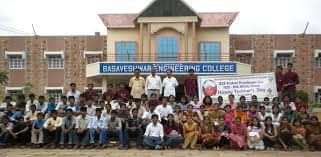
Basaveshwar Engineering College
About
OfficialBasaveshwar Engineering College is a other institution in Bagalkot. Basaveshwar Engineering College (BEC), established in 1994, is a private engineering institution located in Bagalkot, Karnataka, approximately 550 km from Bangalore. The college has evolved from a small institution into one of Karnataka's recognized engineering colleges, primarily serving students from tier-3 cities and rural backgrounds seeking quality engineering education at reasonable costs. The institution operates under the aegis of the KLE Society, a century-old educational trust with a strong presence across professional education in India. BEC offers undergraduate programs in eight core engineering disciplines and postgraduate specializations in select areas. The college is affiliated with Visvesvaraya Technological University (VTU), Belagavi, and follows the university's curriculum framework. With approximately 3,200 students across all programs and a faculty strength of 280, the college maintains a student-teacher ratio of around 1:11.5, which is reasonable for a private engineering institution in rural Karnataka. The campus spans 45 acres on the outskirts of Bagalkot, providing ample space for academic buildings, laboratories, sports facilities, and student accommodation. The college's strength lies in its emphasis on accessibility—offering quality engineering education to students who might not secure admissions at IITs or top-tier NITs but demonstrate academic aptitude. BEC has built a steady reputation for placing students in IT companies, manufacturing units, and core engineering sectors. The placement scenario has improved noticeably over the past five years, with 2023-24 data showing approximately 78% placement rate, with median salary packages in the 4.2-4.8 LPA range depending on the branch. CSE and ECE branches typically attract higher packages. The college infrastructure includes modern laboratories for electronics, mechanical, civil, and chemical engineering; a central library with over 45,000 books and digital access; adequate computer labs with licensed software; and recreational facilities. However, being located in a smaller city, the campus lacks the vibrancy of metro-based institutions and sometimes struggles with attracting top-tier companies for campus recruitment. The student demographic is primarily from Karnataka, with representation from neighboring states; most students are the first generation from their families to pursue engineering education. This creates both an opportunity and a challenge—students are highly motivated but often lack exposure to competitive preparation and industry awareness that metro-based students possess. The college has established itself as a feeder institution for various government jobs in engineering and has a dedicated cell for GATE examination coaching. BEC's academic culture emphasizes foundational engineering concepts, practical skill development, and soft skills training. The college conducts regular seminars, workshops, and industry visits to bridge the gap between academia and industry expectations. Faculty members, while not prominent in national research circuits, are engaged and accessible to students. The faculty retention rate is good, with many faculty members having spent 8-15 years at the institution. Research output is modest, with a few sponsored projects from government agencies and limited publication record in peer-reviewed journals. The college actively participates in state-level academic competitions and hosts an annual technical festival attracting students from nearby colleges. Cultural and sports activities are encouraged, though the competitive intensity is lower compared to metro institutions. Life in Bagalkot poses significant challenges for students from metro backgrounds—the city has limited entertainment options, minimal nightlife, and fewer shopping and dining facilities compared to Bangalore or Hyderabad. However, this environment can be beneficial for students seeking a focused, distraction-free academic atmosphere. The cost of living is significantly lower than metro cities, making it attractive for middle-income families. The college's hostel facilities are functional but basic, with separate hostels for men and women. The mess food is typical of institutional dining with vegetarian and non-vegetarian options. Internet connectivity has improved significantly in recent years with WiFi campus coverage, though download speeds remain moderate. Safety for women is generally good, with the college maintaining strict hostel rules and a dedicated women's grievance cell. The institution is NAAC accredited with B+ grade (2019), indicating satisfactory quality standards. Most engineering programs are NBA accredited, validating the curriculum quality at international benchmarks. BEC is ideal for students who prioritize affordability, steady career progression through traditional placement routes, and a controlled academic environment without excessive competition-driven stress. It is NOT recommended for students seeking cutting-edge research exposure, startup ecosystem engagement, or high-flying package placements. The college accepts students primarily through JEE Main, with cutoff ranks typically in the 45,000-95,000 range for top branches, making it accessible to students with decent JEE preparation. The institution has been instrumental in enabling students from Tier-3 cities and non-metropolitan backgrounds to enter the engineering profession and build stable careers.