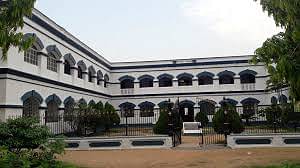
Bankura Christian College
About
OfficialBankura Christian College is a other institution in Bankura, established in 1903. Bankura Christian College, established in 1821 by Christian missionaries, stands as one of the oldest educational institutions in Bengal and among the pioneering colleges in the Bankura district. Founded initially as a school and later upgraded to a college status, BCC has evolved from its colonial-era roots into a modern liberal arts institution with contemporary academic offerings while maintaining its foundational emphasis on ethics, character development, and holistic education rooted in Christian values. The college serves approximately 2,400 students across undergraduate and postgraduate programs spanning sciences, humanities, commerce, and computer applications. It is affiliated with Bankura University and operates under the governance of the Methodist Church, though it welcomes students of all faiths and backgrounds. The institution occupies a sprawling 15.5-acre suburban campus in Kantatoli, Bankura, providing a serene academic environment away from urban congestion yet maintaining reasonable connectivity to the district headquarters. Academically, BCC offers a diverse range of undergraduate honors programs including Physics, Chemistry, Mathematics, Botany, Zoology, English, Bengali, History, Political Science, Philosophy, Economics, and Commerce. At the postgraduate level, the college provides master's programs in Physics, Chemistry, English, and Commerce. The Bachelor of Computer Applications (BCA) program is a notable addition, reflecting the college's commitment to contemporary skill-based education. Most programs follow a semester-based evaluation system with continuous internal assessments. The college has earned NAAC accreditation with a B+ grade (valid through 2027), which is respectable for a regional college in Bengal but indicates room for improvement in research output and infrastructure development compared to tier-1 institutions. The institution maintains a faculty of 95 educators, of which approximately 35% hold doctoral degrees. Faculty research is primarily concentrated in traditional science disciplines with limited interdisciplinary collaborations. Research strengths lie in organic chemistry, plant physiology, and theoretical physics, though research output remains limited compared to research-intensive institutions. The college has established research centers in environmental science and agricultural biotechnology, indicating attempts to align with contemporary needs. However, external research funding and patent generation remain minimal, and faculty publications in high-impact journals are sparse. Campus infrastructure includes a well-stocked library with approximately 45,000 volumes, computer laboratories with internet connectivity, science laboratories equipped with basic research equipment, a sports complex with cricket and badminton facilities, a health center, and separate hostel facilities for men and women. Wi-Fi coverage is available in academic blocks but internet speed (approximately 10 Mbps) is adequate rather than robust. The campus lacks modern amenities like innovation labs, maker spaces, or advanced research facilities that characterize leading institutions. Recent infrastructure improvements include renovation of teaching blocks and addition of smart classrooms in select departments. Placement outcomes are moderate, with approximately 65-70% placement rates in the 2023-24 academic year. The median salary for placed students hovers around 3.5-4.2 lakhs per annum, with highest placements reaching 8-10 lakhs. Primary recruiters come from education sector (coaching institutes, schools), IT services (TCS, Infosys), banking and insurance sectors, and administrative services. The college does not attract top-tier technology companies or management consulting firms. Many graduates opt for civil service examinations, teaching, or further higher education rather than corporate employment. Notable alumni include several educationists, government officials, and academics. Dr. Ashok Kumar Roy (batch 1978) is a renowned physicist and academic administrator; Dr. Rupali Dutta (batch 1995) serves as a senior administrator in state education department; and Rev. Dr. Timothy Machado (batch 1968) became a prominent theological scholar. The alumni network, while small, maintains connections through periodic reunions and mentoring initiatives. The college distinctly positions itself through its emphasis on values-based education, mentoring culture, and focus on developing well-rounded individuals rather than purely job-ready workers. The Christian ethos permeates campus activities, with mandatory ethics classes, regular chapel services (optional for non-Christian students), and emphasis on social service. This appeals strongly to aspirants seeking a nurturing environment but may not suit students prioritizing purely career-centric or secular academic trajectories. Who should apply: Bankura Christian College is ideal for students seeking a liberal arts education in a small-to-medium college setting with personalized faculty interaction, strong pastoral care, and values-based formation. It suits aspirants from Bankura district and nearby regions prioritizing convenience and affordability. Students interested in sciences and humanities who value holistic development over placement outcomes, and those comfortable with a smaller, more intimate academic community will thrive here. However, aspirants with exclusive focus on placements, cutting-edge research exposure, or specialized technical training should explore larger institutions. First-generation learners benefit from the supportive atmosphere, while students requiring diverse academic options and extensive campus infrastructure might find limitations. The college is suitable for students unafraid of pursuing further education (civil services, research) or non-corporate careers.