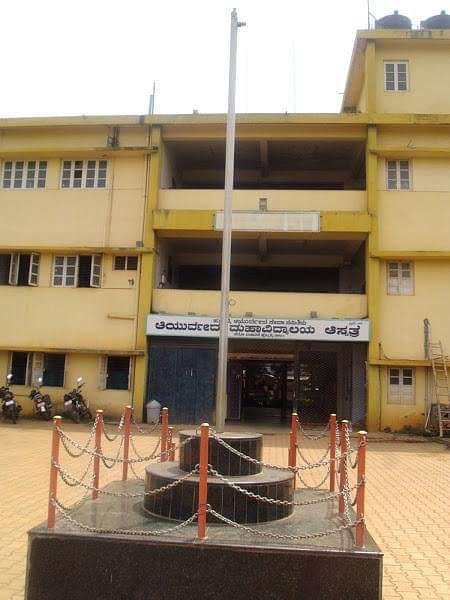
Ayurveda Mahavidyalaya and Hospital
About
OfficialAyurveda Mahavidyalaya and Hospital is a other institution in Hubli, established in 1954. Ayurveda Mahavidyalaya and Hospital (AMH) in Hubli, Karnataka, is one of India's premier institutions dedicated to the preservation, advancement, and propagation of Ayurvedic science and practice. Established in 1985, the institution has grown from a modest teaching facility to a comprehensive center of Ayurvedic excellence serving over 1,850 students across multiple programs. The college operates under the Karnataka Ayurveda University framework and maintains CCIM (Central Council for Indian Medicine) recognition for all its academic offerings. The institution's founding philosophy centered on creating a bridge between ancient Ayurvedic wisdom and modern scientific validation. Over nearly four decades, it has successfully positioned itself as a research-oriented institution while maintaining clinical excellence through its integrated hospital facility. The hospital operates 200+ beds and serves as both a teaching platform and a functional healthcare center, providing authentic Ayurvedic treatments to thousands of outpatients annually. Academic Programs: AMH offers a comprehensive curriculum spanning undergraduate and postgraduate levels. The flagship BAMS (Bachelor of Ayurvedic Medicine and Surgery) program spans 5.5 years and remains the core offering with an annual intake of 60 students. Postgraduate programs include MD (Ayurveda) with specializations in Padartha Vigyan, Samhita Siddhant, Dravya Guna, Roga Nidana, Swasthavritta, Balroga, Kaumarbhritya, and clinical branches like Kayachikitsa and Shalya Tantra. The institution also offers diploma programs in Ayurvedic Nursing and Panchakarma Technician certification courses that attract working professionals. Research Strengths: The institution has established itself as a credible research center within the Ayurvedic academic ecosystem. Faculty members have published over 400+ peer-reviewed papers in the last decade, with specific focus areas including pharmacological validation of classical formulations, clinical outcome studies in chronic disease management, and integration of Ayurvedic principles with modern diagnostic tools. The Dravya Guna (Medicinal Botany) department operates a 2-acre medicinal plant garden with over 350 species relevant to Ayurvedic pharmacopeia. The institution has MOUs with CSIR institutes and several national research organizations. Campus Infrastructure: The 12.5-acre suburban campus provides adequate space for academic buildings, hospital facilities, research laboratories, and student amenities. The institution operates separate hostel blocks for male and female students with traditional accommodation (2-3 sharing rooms) and limited premium options. The teaching hospital is equipped with modern diagnostic facilities including digital X-ray, ultrasound, pathology labs, and a dedicated panchakarma ward. Campus WiFi coverage reaches 70% of the campus, with full connectivity in academic blocks and hostels. The library houses approximately 18,000 volumes including rare Sanskrit manuscripts and contemporary Ayurvedic literature. Placement and Career Outcomes: BAMS graduates have a realistic but limited conventional job market, as most pursue either clinical practice, government hospital positions through NEET-SS exams, or further academic specialization. The 2023-24 placement data shows approximately 35% of graduates securing government hospital positions, 25% establishing independent clinics, 15% pursuing higher education, and 25% working in corporate wellness centers, Ayurvedic pharmaceutical companies, or government research institutions. Median starting salary for government hospital positions is approximately 450,000 INR annually. Private sector positions in Ayurvedic pharmaceutical R&D or wellness centers offer 350,000-600,000 INR packages. The college lacks conventional campus recruitment like IT/management colleges, reflecting the specialized nature of the field. Notable Alumni: The institution has produced several respected Ayurvedic practitioners, researchers, and academicians who have contributed to the field's credibility and modernization. Alumni work across government health ministries, established private Ayurvedic chains, and international Ayurveda centers. Campus Life and Student Experience: The suburban location in Hubli provides a relatively quiet, focused academic environment distinct from metro campuses. Hostel life is traditional and structured, with separate facilities for male and female students. The college enforces dress codes aligned with Ayurvedic institutional culture (kurta-pajama or churidar for practical classes). Student clubs include Ayurveda Research Forum, Yoga and Wellness Club, and traditional performing arts groups. The annual Ayurveda Day celebrations and departmental seminars provide intellectual engagement. Social life revolves more around academic discussions and professional networking than party culture. Ragging incidents are minimal due to senior-junior mentorship models in professional healthcare education. Who Should Apply: This institution suits students with genuine interest in Ayurveda as both science and practice, not those viewing it as a backup to mainstream medicine. Ideal candidates possess patience for traditional text-based learning combined with scientific curiosity, comfort with clinical work, and understanding that BAMS qualification requires additional exams (state licensing, NEET-SS for specialty) for employment. Students comfortable with Hubli's tier-3 city environment and academic-heavy campus culture will thrive. International students interested in Ayurvedic education specifically are well-served by the institution's research credentials and integrated hospital exposure. Students primarily seeking high-paying job placements should reconsider, as Ayurveda is a specialized healthcare field with different economic models than engineering or management education.