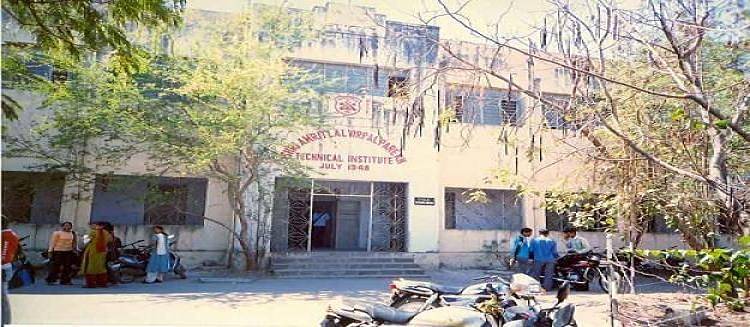
A.V. Parekh Technical Institute
About
OfficialA.V. Parekh Technical Institute is a other institution in Rajkot, established in 1948. A.V. Parekh Technical Institute (AVPTI) is one of Gujarat's oldest private engineering colleges, established in 1983 with a vision to impart quality technical education. Located in Rajkot, a vibrant industrial city in Gujarat known for textile manufacturing and agricultural machinery production, AVPTI has evolved into a comprehensive technical institution offering undergraduate and postgraduate programs across multiple engineering disciplines. The institute was founded by the Parekh family with a commitment to bridging the gap between classroom learning and industry demands, a philosophy that remains central to its operations today. Academic Structure and Programs: AVPTI operates with a strong engineering focus, offering 12+ UG programs and several PG programs including MTech in specialized domains. Programs include B.Tech in Civil Engineering, Mechanical Engineering, Electrical Engineering, Electronics and Communication Engineering, Computer Science and Engineering, Mechanical (Production) Engineering, Automobile Engineering, and Chemical Engineering. The institute also offers diploma programs through its polytechnic division and M.Tech programs in areas like Power Systems, Structural Engineering, and VLSI Design. Each program emphasizes both theoretical knowledge and practical skill development through well-equipped laboratories and industry-linked projects. Campus and Infrastructure: The 45-acre suburban campus provides a balanced environment for focused academics and recreational activities. The infrastructure includes modern computer labs with the latest software, well-stocked libraries, and dedicated research facilities. However, the campus can feel crowded during peak hours given the student population. The library has decent collections but digital resources need expansion. Internet connectivity is reasonably good across most areas, though hostel WiFi sometimes experiences congestion during evening hours when many students are online simultaneously. Academic Culture and Faculty: The faculty comprises experienced academicians and industry professionals, with approximately 35% holding PhDs. The institute emphasizes hands-on learning through projects, industry visits, and guest lectures from professionals. Faculty-student interaction is generally good, though some departments experience occasional capacity strain. The curriculum is regularly updated to align with industry trends, and the institute maintains connections with leading technology companies. However, students report that theory-practice balance varies significantly across departments—some faculties excel at practical demonstration while others remain lecture-oriented. Placements and Recruitment: Placements are a strength, with consistent 80-85% placement rates across most branches. The computer science and IT-related programs achieve nearly 95% placements. Median package hovers around 6-6.5 LPA for 2023-24, with top performers securing packages exceeding 15 LPA. The institute has strong relationships with IT companies like Infosys, TCS, Wipro, and HCL, and also attracts companies from manufacturing, core engineering, and finance sectors. Civil and Mechanical engineering students sometimes struggle with limited placements in their specific domains, though many transition into IT roles. The placement cell actively conducts training programs, mock interviews, and resume workshops. Research and Innovation: The institute has several research centers focusing on structural engineering, renewable energy, IoT applications, and advanced manufacturing. Student participation in research is moderate, with some departments encouraging undergraduate research projects. However, research output and publications remain limited compared to top-tier institutions. The innovation lab supports student startup ideas, though funding and support for longer-term ventures is inconsistent. Campus Life and Student Experience: The hostel accommodations are decent, with separate wings for boys and girls. Hostel life is vibrant with regular cultural events, sports activities, and inter-hostel competitions. The mess serves multi-cuisine food with generally acceptable quality, though students occasionally complain about repetitive menus. The institute has active student clubs including technical societies (like robotics, coding clubs), cultural groups, and sports teams. Annual events like TechFest and Confluence attract participation from other colleges. Sports facilities include cricket grounds, badminton courts, and a basketball court, though a swimming pool is absent. The campus culture is reasonably inclusive, with students from diverse backgrounds. Ragging is strictly monitored and instances are rare. Geographic and City Context: Rajkot is a tier-3 city in Gujarat with a robust industrial base, particularly in textile machinery, automotive components, and agricultural equipment manufacturing. This makes it a practical hub for mechanical and production engineering students seeking internships and placements. The city has a safe, family-oriented environment with lower living costs compared to metros. Climate is arid to semi-arid with hot summers (40-45°C May-June) and mild winters (15-25°C December-January). The city lacks metro connectivity but has decent auto-rickshaw and bus services. Travel to major cities like Ahmedabad (220 km, 4 hours) and Mumbai (440 km, 8 hours) is feasible by bus or train. Who Should Apply and Why: AVPTI is ideal for students seeking solid engineering education in a smaller city environment with reasonable placement outcomes. It's particularly suited for students interested in manufacturing, automotive, civil, or mechanical engineering given Rajkot's industrial relevance. The institution offers a good balance between academics, practical skills, and campus life without the intense competition of top-tier IITs/NITs. Students should note that it's not a research-intensive institution, so those inclined toward academic research or higher studies abroad may find limited guidance. The college is also suitable for students uncomfortable with metropolitan city pressures and seeking a more grounded, community-oriented educational experience. However, expectations about world-class infrastructure or brand recognition comparable to IITs should be managed realistically. The institute delivers consistent, job-ready engineers suitable for India's manufacturing and IT industries, making it a pragmatic choice for middle to upper-middle-class families prioritizing career placement and reasonable fees over prestige.