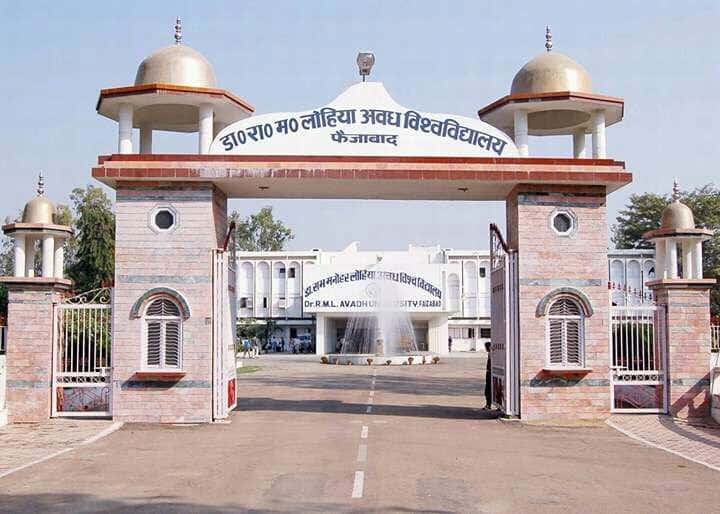
Dr Ram Manohar Lohia Avadh University
About
OfficialDr Ram Manohar Lohia Avadh University is a other institution in Faizabad. Dr Ram Manohar Lohia Avadh University (RMLAU), located in Faizabad, Uttar Pradesh, is a state university established in 2005 through the merger of Avadh University (founded 1987) and Ram Manohar Lohia University. Named after freedom fighter and socialist leader Dr Ram Manohar Lohia, the university serves as a significant educational institution in eastern Uttar Pradesh, catering primarily to students from tier-2 and tier-3 cities in the region. The university operates across multiple campuses, with the main campus spanning 150 acres on Sultanpur Road, providing adequate infrastructure for academic pursuits. Academic Structure and Offerings: RMLAU offers a diverse range of undergraduate and postgraduate programs across engineering, sciences, law, humanities, commerce, and professional studies. The engineering faculty operates multiple specializations including Civil, Mechanical, Electrical, Electronics, Computer Science, and Information Technology, with an undergraduate intake capacity exceeding 1,200 students annually. The university awards degrees recognized by the UGC and conducts examinations following the semester system. However, accreditation status remains below tier-1 standards, with NAAC assessment reflecting 'B' grade institutional performance as of last evaluation. The university faces persistent criticism regarding outdated curriculum structures in some departments and slow adoption of modern pedagogical methods. Placement and Career Outcomes: Placement data from 2023-24 reveals a 62-68% overall placement rate, significantly lower than premier institutions. Average salaries cluster around 4.2-5.8 LPA for engineering graduates, with median packages at 4.5 LPA. Top recruiters include Cognizant, Wipro, Infosys, HCL Technologies, BSNL, and various state government departments. However, mass recruiting remains limited, with most placements concentrated in IT services and state sector roles rather than core engineering or innovation-driven companies. The placement narrative here is honest—this is not a destination for top-tier consulting or high-paying tech roles; instead, students secure stable middle-class employment. Campus Infrastructure and Facilities: The main campus includes a central library housing approximately 180,000 volumes with limited digital resources, computer labs with aging equipment, engineering workshops, a modest sports complex, health center, hostel facilities for approximately 2,000 students, and cafeteria services. WiFi coverage is partial, available mainly in academic blocks and limited hostel areas. The research infrastructure remains underdeveloped, with minimal laboratory modernization and limited funding for research projects. Campus transport via institutional shuttle operates on limited schedules. The infrastructure is adequate for undergraduate teaching but falls short of research expectations. Student Demographic and Campus Culture: RMLAU enrolls approximately 45,000 students (including distance education), with majority being first-generation learners from Uttar Pradesh, Bihar, and adjacent regions. The student body comprises approximately 52% women, reflecting growing female participation in higher education across the region. Campus culture is relatively conservative, with strong emphasis on discipline and hierarchical faculty-student relationships. Student unions operate with active participation in cultural and sports events. Ragging has been reported sporadically despite strict institutional policies, requiring vigilance. The community is largely supportive, with significant participation in state-level competitions and cultural festivals. Academic and Research Landscape: The faculty strength of 820 academics includes approximately 35-40% with doctoral qualifications, though research output remains modest. The university has established research centers in agriculture, environmental studies, and applied sciences, but research funding and publication impact are significantly lower than national benchmarks. Industry partnerships exist primarily with state-level enterprises and PSUs rather than multinational corporations. The research culture is emerging but underdeveloped, with limited doctoral scholars and minimal international collaboration. Strengths and Unique Positioning: RMLAU's primary strengths include affordability (among lowest fee structures in northern India), accessibility for economically disadvantaged students, regional importance in eastern Uttar Pradesh's educational landscape, and strong connections with state government recruitment processes. The university effectively serves as a pathway for students from vernacular backgrounds to secure government employment through UPSC, state PCS, and banking examinations. Several faculty members have contributed to state-level policy development in agriculture and rural development. Limitations and Honest Assessment: Significant limitations include: below-average infrastructure compared to central universities, limited research output and doctoral program quality, weaker faculty at some departments with limited international exposure, dated curriculum in several programs, modest placement outcomes with limited private sector traction, and peripheral location in Faizabad reducing exposure to major industry hubs. The university operates in a highly competitive state higher education environment where tier-1 institutions (BHU, IIT-BHU, IIT Kanpur) and central universities overshadow regional contributions. Who Should Apply: RMLAU is most suitable for: (1) students from economically weaker backgrounds seeking quality education at minimal cost, (2) aspirants targeting government sector employment in Uttar Pradesh, (3) first-generation learners requiring supportive academic environment, (4) candidates aiming for civil services or state-level examinations, and (5) students prioritizing regional accessibility over global brand recognition. The university is NOT recommended for: (1) students seeking high-paying corporate careers in multinational tech companies, (2) research-focused aspirants requiring world-class doctoral programs, (3) candidates aiming for top-tier consulting or investment banking, and (4) those expecting metro-level campus facilities and cosmopolitan culture. The institution represents honest value for its target demographic—delivering accessible, discipline-oriented undergraduate education with government sector employment pathways, while maintaining transparent acknowledgment of limitations in research, infrastructure, and corporate placement outcomes.