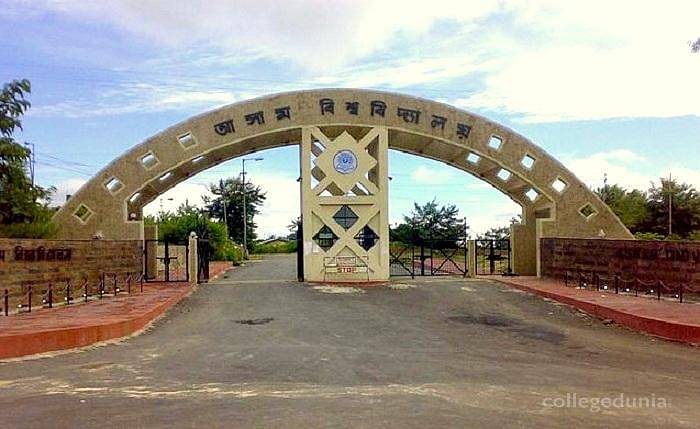
Assam University
About
OfficialAssam University is a other institution in Silchar. Assam University, established in 1994 by an Act of Parliament, is a Central University located in Silchar, the second-largest city in Assam. Founded to serve the educational aspirations of North-East India, particularly the Barak Valley region, it has grown into a comprehensive university offering undergraduate and postgraduate programs across sciences, humanities, engineering, and professional disciplines. The university is situated approximately 180 acres of verdant campus on the outskirts of Silchar, strategically positioned to serve students from Assam, Meghalaya, Mizoram, and Tripura, making it a crucial educational hub for the region. Historically, Assam University was established as a response to the educational needs of the North-Eastern states, which historically lacked adequate higher education infrastructure. The university has progressively expanded its academic offerings and research capabilities. Initially focusing on liberal arts and sciences, it has diversified into engineering (through the School of Technology), management (MBA programs), and professional studies. The university's dual-campus model includes the main campus in Silchar and a satellite campus in Diphu, Karbi Anglong district. Academic strengths lie in humanities and social sciences, particularly linguistics, English literature, history, and regional studies. The Department of English has a strong reputation for teacher education and literary studies. The School of Technology offers engineering programs in civil, mechanical, electrical, and computer science disciplines, though these programs are relatively newer and still building industry connections. The university emphasizes research, with several funded research projects under AICTE, UGC, and DST schemes. However, research output and citations remain modest compared to tier-1 institutions. The Central Research Laboratory and various departmental research centers support faculty and student research activities. Placement performance is moderate. Engineering placements average 60-70%, with core companies recruiting for civil and mechanical roles, while IT placements are limited. Non-engineering undergraduate and postgraduate programs have better placement rates (75-85%), primarily in education, government, and administrative sectors. Many graduates pursue civil service examinations or teaching positions. The university has tie-ups with organizations like Cognizant, TCS (limited), and smaller regional IT firms, but placement diversity is limited. Government sector recruitment (UPSC, SSC, state PSCs) remains a significant career pathway for Assam University graduates. Notable alumni include several IAS and IPS officers, journalists, academics, and administrators. Dr. Dhrubajyoti Borah, a prominent literary figure and academic, has taught here. Several alumni have contributed to research in regional linguistics and literature. However, the university lacks prominent alumni in technology, entrepreneurship, or global corporations, reflecting its regional focus and limited IT industry integration. Campus life reflects the university's location in a tier-3 city with a strong regional identity. The environment is academically focused but with limited modern amenities. Hostels are available but basic, with modest infrastructure. The city of Silchar offers a culturally vibrant setting with local markets, historical sites, and a blend of Assamese, Bengali, and Manipuri cultures. However, entertainment and dining options are limited compared to metro cities. The university conducts several cultural fests including Udaan (annual fest) and departmental programs, but scale and participation are smaller than tier-1 institutions. Infrastructure presents both strengths and challenges. The library has over 200,000 books and e-resources, but internet connectivity is inconsistent. The campus has basic sports facilities, a health center, and administrative buildings, but laboratory equipment in engineering departments is dated. WiFi coverage is partial and unreliable. Classroom infrastructure is functional but not state-of-the-art. The university is gradually upgrading facilities under RUSA (Rashtriya Uchchatar Shiksha Abhiyaan) and other government funding. Who should apply: Assam University is ideal for students prioritizing affordability, a close-knit academic community, and educational aspirations in humanities, social sciences, or teaching. It's suitable for North-Eastern students seeking education closer to home with lower living costs. Students interested in regional studies, Indian languages, and teacher education will find a supportive environment. However, it's NOT recommended for students seeking world-class IT engineering education, tier-1 corporate placements, or cutting-edge research facilities. Engineering students should have modest expectations on placement and should supplement their learning with online courses and internships. Management program aspirants should be aware that the MBA from this university carries limited value in national markets compared to tier-1 B-schools. The university's unique value lies in its affordability, strong regional networks, accessible education for economically disadvantaged students, and a scholarly environment emphasizing teaching over research. It serves a social mission—democratizing higher education for North-East India—rather than competing for national rankings. For the right student profile (region-specific, budget-conscious, academically motivated, humanities-inclined), it remains a solid regional choice with genuine opportunities for intellectual growth.