Asha Institute of Nursing
About
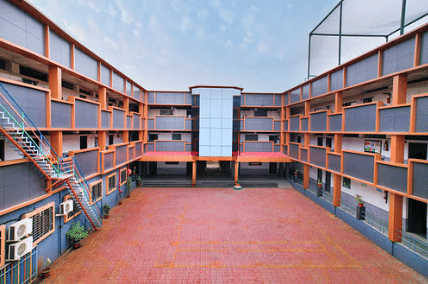
OfficialAsha Institute of Nursing is a other institution in Surat, established in 2023. Asha Institute of Nursing, established in 2008, is a private nursing college located in Surat, Gujarat, one of India's fastest-growing industrial cities. The institute was founded with the vision of producing competent, compassionate healthcare professionals to meet the growing demand for trained nurses in Gujarat and beyond. Operating under the aegis of the Nursing Council of India and affiliated with Gujarat Nursing Council, the institution has carved a niche in paramedical education within the western region. The institute offers a range of nursing programs from diploma to postgraduate levels, catering to students with varying educational backgrounds. Its Bachelor of Science in Nursing (B.Sc. Nursing) is a four-year full-time program that emphasizes both theoretical knowledge and practical clinical experience. The General Nursing Midwifery (GNM) diploma is a three-year program designed for post-secondary school students. Additionally, the college offers specialized postgraduate programs in Medical-Surgical Nursing, Community Health Nursing, and Psychiatric Nursing, allowing students to pursue advanced clinical expertise. Academically, Asha Institute focuses on a clinically-oriented curriculum aligned with Indian Nursing Council standards. The institute maintains partnerships with several private and government hospitals in Surat including Shalby Hospital, Sterling Hospital, and SMIMER Hospital for clinical rotations. This ensures students gain hands-on experience across diverse patient populations and healthcare settings. Faculty members are predominantly experienced nurses with backgrounds in clinical practice and some with research publications in nursing journals. The campus infrastructure, while modest, includes a lecture hall complex, laboratory facilities for nursing procedures, and computer labs for theoretical learning. The library houses nursing journals, textbooks, and access to online databases. Student accommodation is available in a nearby hostel with separate facilities for male and female students, though many local students prefer to commute from home given Surat's urban connectivity. Placement outcomes at Asha Institute have been reasonably strong, with 2023-24 data showing approximately 78% placement rate within 6-9 months of graduation. Graduates predominantly secure positions in private hospitals and healthcare chains across Gujarat, Maharashtra, and Rajasthan. Some graduates opt for further studies through postgraduate nursing programs or competitive examinations like AIIMS/CMC nursing entrance exams. The salary range for fresh B.Sc. Nursing graduates typically ranges from ₹250,000 to ₹400,000 annually in private hospitals, with government hospital placements offering more stable career paths albeit at slightly lower initial salaries (₹180,000-₹280,000). The institute has produced several alumni who now work as senior staff nurses, nursing educators, and healthcare administrators across various hospitals. Some notable alumni have pursued further education abroad, particularly in countries like Australia and the UAE where Indian-trained nurses are in high demand. Campus life is modest but functional. The college organizes annual health awareness camps, participates in district-level nursing conferences, and encourages student participation in research projects. However, compared to metropolitan nursing institutions, extracurricular activities are limited. The student body is diverse, drawing from across Gujarat and neighboring states, with approximately 55% female and 45% male students. What makes Asha Institute distinctive is its focus on clinical placements in a city with active healthcare expansion, the proximity to multiple hospital networks for internships, and relatively affordable tuition fees compared to nursing colleges in metropolitan areas. The institution is particularly suited for students seeking clinical hands-on training without the premium fees of top-tier institutions, and for those committed to nursing as a healthcare profession rather than treating it as a backup option. Key strengths include experienced clinical faculty, strong hospital affiliations, and a practical curriculum emphasis. Weaknesses include limited research infrastructure compared to larger institutions, modest campus facilities, limited international academic exchanges, and fewer student support services compared to larger colleges. The college is recommended for dedicated nursing students from middle-income backgrounds, those willing to work in clinical settings immediately post-graduation, and students preferring practical experience over research orientation.