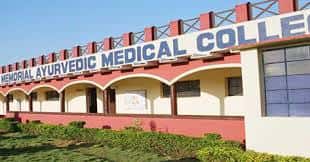
Aroor Laxminarayana Rao Memorial Ayurvedic Medical College & P.G. Centre
About
OfficialAroor Laxminarayana Rao Memorial Ayurvedic Medical College & P.G. Centre is a other institution in Chikmagalur, established in 1987. Aroor Laxminarayana Rao Memorial Ayurvedic Medical College & P.G. Centre, established in 1991, stands as one of Karnataka's prominent institutions dedicated to preserving and advancing the ancient science of Ayurveda. Located in the serene hills of Chikmagalur, the college was founded with the vision of integrating traditional Ayurvedic knowledge with modern scientific methodologies. The institution is named after the philanthropist Aroor Laxminarayana Rao, whose endowment established this center of excellence for Ayurvedic education and research. Over three decades, the college has evolved from a modest teaching institution into a comprehensive medical college with affiliated post-graduate programs, making it a significant contributor to Ayurvedic medical education in South India. The college operates under the stringent regulatory framework of the National Board of Examinations (NBE), the Central Council for Indian Medicine (CCIM), and the Government of Karnataka Department of Ayurveda, Yoga & Naturopathy, Unani, Siddha and Homeopathy (AYUSH). Academic programs include a 5.5-year Bachelor of Ayurvedic Medicine and Surgery (B.A.M.S.), integrated M.D./M.S. programs in various Ayurvedic specialties including Dravya Guna (Pharmacology), Padartha Vigyan (Ayurvedic Physiology), Rasashastra (Alchemy and Metallurgy), and clinical specialties like Kayachikitsa (Internal Medicine) and Balroga (Pediatrics). The post-graduate center offers both full-time and part-time M.D./M.S. programs with research emphasis, attracting practitioners seeking specialization. The college has recently introduced certificate and diploma courses in various Ayurvedic therapies and wellness management, expanding its educational footprint beyond traditional degree programs. Research forms a cornerstone of the institution's identity. The college houses dedicated research centers focusing on ethnopharmacology, herbal drug standardization, and clinical validation of Ayurvedic formulations. Faculty members actively collaborate with national institutions like CSIR laboratories and the Indian Council of Medical Research (ICMR) for research projects centered on cardiovascular health, immunomodulation, and chronic disease management through Ayurvedic approaches. The college maintains an extensive herbal garden spanning 2.5 acres with over 400 medicinal plant species, facilitating hands-on botanical studies and ethnopharmacological research. Notable research outputs include peer-reviewed publications in both Indian and international journals, highlighting the college's commitment to evidence-based Ayurveda. Campus infrastructure reflects a blend of traditional values and modern facilities. The main building showcases classical Ayurvedic architectural principles while housing fully equipped lecture halls with audio-visual systems, a digital library with online access to Ayurvedic textbooks and international journals, and well-ventilated laboratories for pharmaceutical and clinical studies. The college operates its own teaching hospital (Aroor Ayurvedic Hospital) with 120 inpatient beds and an outpatient department handling 150-200 patients daily, providing students with substantial clinical exposure under faculty supervision. Specialized departments include Panchakarma (detoxification therapies), Kaya Chikitsa (Internal Medicine), Balroga (Pediatrics), Striroga (Gynecology), and Shalya Tantra (Surgery), each with dedicated clinics and treatment facilities. The hospital's pharmacy produces classical Ayurvedic preparations under quality standards, serving as both a teaching tool and revenue-generating unit. Student life at the college reflects the dual nature of Ayurvedic education—rigorous academic learning combined with clinical practice. The college maintains a balanced gender ratio (55% female, 45% male) across undergraduate and postgraduate batches, fostering an inclusive learning environment. Residential facilities include gender-segregated hostels with basic amenities; however, many students opt for private accommodations in nearby towns. The college encourages participation in national Ayurvedic conferences, symposiums, and research presentations, with annual budgets allocated for student travel and poster exhibitions. A student welfare committee addresses grievances, while a dedicated placement cell assists graduates in career planning, though traditional Ayurveda practice options (establishing clinics, practising hospitals) remain the primary career path. Sports and cultural clubs exist but remain less developed compared to larger metropolitan institutions; the college emphasizes academic and clinical excellence over extracurricular activities. Placement trends reflect the specialized nature of Ayurvedic education. Approximately 70% of graduates establish independent medical practice, either as solo practitioners or in group clinics, with startup support limited but improving. About 15% pursue higher education (M.D./M.S.) either at this institution or elsewhere, while 10% opt for careers in Ayurvedic pharmaceuticals, wellness centers, or corporate Ayurveda programs. Salary expectations for those entering pharmaceutical companies or corporate wellness roles range from 3-5 lakhs annually for fresh graduates. Government employment through Central AYUSH services remains competitive, with only 3-5% of graduating batches securing such positions. International interest in Ayurveda has emerged, with a few graduates successfully working in Ayurvedic clinics in the Middle East and Europe, commanding higher remuneration (5-8 lakhs annually) for experienced practitioners. Notable alumni include Dr. K. P. Varier, recognized for advances in Ayurvedic therapeutics; Dr. Anita Sharma, heading a multi-specialty Ayurvedic hospital in Bangalore with over 150 beds; and Dr. Ravi Rao, pioneering research in herbal immunomodulation published in indexed journals. The alumni network, though modest, is increasingly active in mentoring current students and facilitating internships in established Ayurvedic institutions across India. The college distinguishes itself through its commitment to preserving classical Ayurvedic knowledge while embracing scientific validation. The rural setting in Chikmagalur, though challenging for urban-oriented students, provides authentic exposure to traditional healing practices and access to medicinal plants in their natural habitat. The college's emphasis on clinical practice—with students engaging in hospital duties from the second year itself—develops practical competence superior to many theoretical-heavy programs. However, the rural location limits exposure to cutting-edge technology and infrastructure common in metropolitan medical colleges. The college is best suited for students passionate about traditional medicine, those willing to establish independent practice, or those seeking specialized clinical skills in Ayurvedic therapies. It is less ideal for students expecting rapid career advancement through corporate employment or those requiring cosmopolitan campus amenities. The institution represents a thoughtful choice for serious Ayurveda students valuing authentic learning over prestige branding.