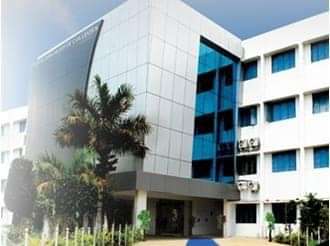
Arignar Anna Institute of Science and Technology
About
OfficialArignar Anna Institute of Science and Technology is a other institution in Chennai, established in 2000. Arignar Anna Institute of Science and Technology (AIST), established in 2000, is a private engineering institution located in the suburban expanse of Thiruvallur District, approximately 40 kilometers north of Chennai's city center. Named after the legendary Tamil scholar and political leader Arignar Anna, the institution was founded with the vision of providing quality technical education accessible to Tamil Nadu's aspiring engineers and technologists. Over two decades, AIST has evolved from a modest engineering college into a multidisciplinary institution offering undergraduate and postgraduate programs across engineering, management, sciences, and emerging technology domains. The institution operates across a sprawling 45-acre campus designed with modern pedagogical principles. AIST's academic portfolio includes undergraduate 4-year BTech programs in 10+ specializations (Civil, Mechanical, Electrical, Electronics, Computer Science, Information Technology, Mechanical & Automation, Automobile, Chemical, and Biotechnology), integrated 5-year programs, Master's degrees in 8 disciplines, and doctoral programs in select areas. The undergraduate program follows the Anna University curriculum for affiliated colleges, which provides standardized assessment but limited institutional autonomy in curriculum design. Academic strengths lie particularly in core engineering disciplines and emerging areas like automation, renewable energy, and biotechnology. The institution has developed moderate research infrastructure with dedicated labs for materials science, robotics, renewable energy systems, and biotechnology research. Faculty research output remains modest by IIT standards but competitive for tier-2 private engineering colleges. The college has published over 300 research papers in peer-reviewed journals in the past five years and secured grants from government bodies including DST and CSIR for applied research projects. However, the research culture is primarily driven by publication targets rather than breakthrough innovations, and industry-academia collaboration remains underdeveloped compared to established tier-1 institutions. Placement outcomes at AIST have shown consistent improvement, with 2023-24 academic year recording 84% placement rate for engineering undergraduate programs. Median package stands at 4.8 LPA with highest packages reaching 12.5 LPA in computer science disciplines. Top recruiters include TCS, Infosys, Wipro, HCL Technologies, Tech Mahindra, and emerging startups from Bangalore's tech ecosystem. However, placement concentration remains heavily skewed toward IT services, with limited core engineering opportunities. Manufacturing and automotive sector placements have improved marginally following new industry partnerships. Students in non-CSE branches (Civil, Mechanical, Chemical) face significantly lower placement rates (65-72%) and lower salary packages (3.2-4.2 LPA), creating a two-tier placement reality within the same institution. Campus infrastructure reflects moderate investment with decent classroom facilities, computer labs with modern systems, and well-stocked library with 35,000+ books and digital subscriptions. However, infrastructure quality varies significantly across buildings—older structures lack climate control and modern amenities, while newer blocks provide comfortable learning spaces. Hostel facilities accommodate approximately 1,200 students with separate wings for men and women. Hostel quality is average, with basic amenities and occasional maintenance issues. Internet connectivity on campus is reliable (30+ Mbps) but bandwidth allocation per student remains constrained during peak hours. The campus lacks a swimming pool and sports infrastructure lags behind premier institutions, with only a basic gymnasium and outdoor volleyball/badminton courts. Student life at AIST is characterized by reasonable engagement levels. The college hosts 15-20 student clubs covering technical, cultural, and sports domains. Annual cultural fest (Arignar Fest) attracts participation from neighboring colleges and runs for 2-3 days. Technical fest focuses on hardware projects and coding competitions. However, student engagement overall is modest—approximately 40-50% of students actively participate in extracurricular activities. The remaining cohort maintains academic focus or remains passive. Ragging is officially zero-tolerance, with no reported incidents in the past three years. Campus safety for women is generally good, with dedicated women's helpline and secured hostel gates, though night transportation could be enhanced. Geographically, AIST's suburban location 40km from Chennai creates both advantages and constraints. Proximity to emerging IT hubs and educational institutions is offset by limited direct access to city's social and professional networks. Daily commute from on-campus hostel is negligible, but off-campus students spend 45-90 minutes on public transport. The Thiruvallur locality is developing with reasonable food options, medical facilities, and transport connectivity, but lacks the cosmopolitan amenities of central Chennai. Students frequently cite the "campus bubble" effect—the institution is somewhat isolated from broader city development, limiting exposure to Chennai's tech and startup ecosystem. Who should apply: AIST is ideal for students seeking affordable private engineering education with decent placement outcomes in IT services. Strong candidates in Mathematics and Physics with JEE Main scores in 40-70 percentile range find good value here. Students prioritizing campus life, industry exposure, and moderate research opportunities should consider tier-1 alternatives. The college is particularly suitable for those from lower-middle-class backgrounds seeking quality education at reasonable cost (₹3.5-4.2L per year all-inclusive). Students with strong core engineering interests (Civil, Mechanical, Chemical) should be aware of limited placement ecosystem for these branches and plan accordingly. Girls' engineering aspirants will find a reasonably safe, women-centric support structure, though facilities remain utilitarian rather than premium. Students expecting premier infrastructure or cutting-edge research facilities should explore IITs, NITs, or top private universities despite cost implications.