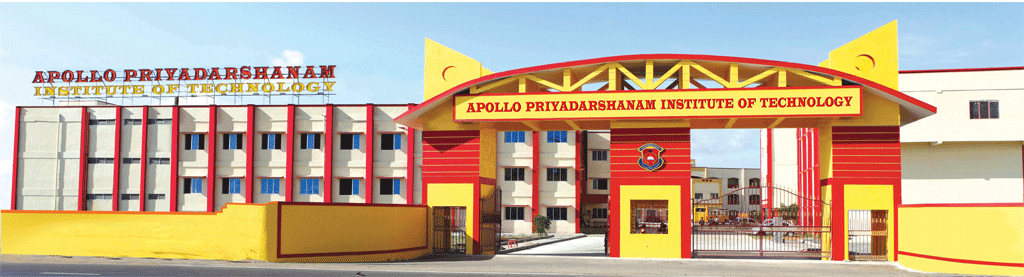
Apollo Priyadarshanam Institute of Technology
About
OfficialApollo Priyadarshanam Institute of Technology is a other institution in Chennai, established in 2010. Apollo Priyadarshanam Institute of Technology (APIT), established in 2007 under the aegis of Apollo Hospitals Group, is a private engineering institution located in Vandalur, Chennai. Named after Dr. Prathap C. Reddy, founder of Apollo Hospitals, the college represents a unique convergence of healthcare expertise and engineering education. The institution is housed within the Apollo Health City campus, giving it a distinctive character as an engineering college with integrated access to healthcare research facilities and clinical environments. The college was founded with a mission to produce engineers who combine technical excellence with empathy and social responsibility—values inherited from the Apollo Hospitals legacy. This healthcare connection is not merely symbolic; students gain exposure to biomedical engineering applications, hospital IT infrastructure, and real-world healthcare problem-solving through internships and projects within the Apollo ecosystem. Academic Strength and Programs: APIT offers undergraduate and postgraduate programs in major engineering disciplines including Computer Science and Engineering, Electronics and Communication Engineering, Mechanical Engineering, Civil Engineering, Biomedical Engineering, and Electrical and Electronics Engineering. The college recently introduced specialized programs like Artificial Intelligence & Data Science, reflecting industry demand. The curriculum balances theoretical rigor with practical application, with significant emphasis on hands-on learning through laboratories, projects, and industry collaborations. The institution has NBA (National Board of Accreditation) accreditation for multiple programs and NAAC accreditation, validating academic standards. Faculty members include PhD holders from reputed institutions, and the college maintains a faculty-to-student ratio of approximately 1:15, enabling personalized attention in smaller batches. Research and Innovation: APIT has established research centers focused on biomedical engineering, IoT, renewable energy, and advanced materials. The college encourages undergraduate research through special cells like the Innovation Lab and Research Park. Several faculty members are actively engaged in funded research projects with government bodies (DST, DRDO) and private industries. The biomedical engineering department particularly benefits from proximity to Apollo's clinical and research facilities, enabling unique research opportunities in medical device development and healthcare IT. Placement Record: APIT maintains a strong placement record with 92-95% placement rates across batches. Average packages range from 6-8 LPA for core engineering roles, with top achievers securing 15-20+ LPA in IT and analytics sectors. Major recruiters include TCS, Infosys, Wipro, Microsoft, Amazon, Goldman Sachs, and specialized biomedical companies. The college has a dedicated placement cell with industry partnerships developed through Apollo Hospitals connections and broader corporate networks. Campus Infrastructure: The 18-acre suburban campus is well-developed with modern facilities including air-conditioned classrooms, state-of-the-art laboratories (networking labs, electronics labs, CAD labs, biomedical labs), library with 35,000+ volumes and digital resources, and sports facilities. The campus benefits from proximity to Apollo Health City's infrastructure, providing students access to advanced medical equipment for research purposes. However, being suburban, the college is not directly on metro lines, requiring commute time to reach central Chennai. Campus Life and Culture: The college maintains an active campus life with over 30 student clubs covering technical, cultural, and sports domains. Annual festivals include Prism (technical fest), Sangam (cultural fest), and various sports meets. Student participation in hackathons, coding competitions, and engineering design challenges is strong. The hostel facilities accommodate approximately 1,200 students with separate facilities for men and women. Mess quality is adequate but occasionally receives mixed feedback regarding food variety. Internship and Industry Exposure: APIT has strong industry partnerships with 200+ companies. Internship placements are mandatory and highly facilitated. The Apollo connection provides unique biomedical internship opportunities unavailable at most engineering colleges in India. Students engage in real hospital projects, medical device development, and healthcare IT implementations. Challenges and Realistic Assessment: While APIT offers quality education and good placements, prospective students should note several factors: (1) The suburban Vandalur location, while peaceful and focused on academics, involves 45-60 minute commutes to central Chennai for internships and off-campus activities; (2) Fee structure is premium at approximately 4.5-5 LPA annually, which is higher than government engineering colleges but comparable to peer private institutions; (3) The college's younger age (established 2007) means it lacks the alumni network depth of older institutions like Anna University engineering colleges; (4) Hostel accommodation is available but not guaranteed for all students, forcing some to seek PG accommodation at higher costs; (5) The healthcare-focused identity appeals to biomedical engineering students but may not significantly benefit computer science or mechanical engineering students unless they pursue electives in medical technology. Who Should Apply: APIT is ideal for students seeking: quality engineering education with strong industry placements in IT and core sectors; interest in biomedical engineering combined with clinical research exposure; preference for smaller class sizes and personalized attention; willingness to pay premium private college fees for better infrastructure and placement support; location flexibility and ability to commute from suburbs. APIT is less suitable for: students seeking purely government-funded education; those unable to afford 5+ LPA annual fees; students prioritizing metro-adjacent location or immediate city access; those seeking massive alumni networks of 50+ year old institutions.