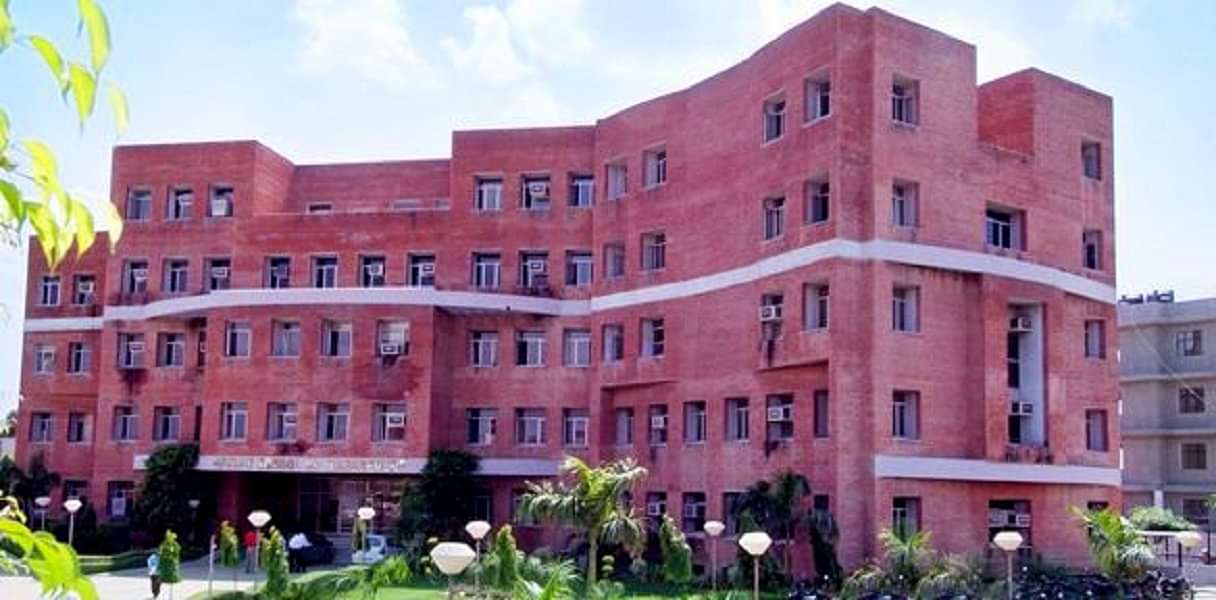
Apeejay Institute of Mass Communication
About
OfficialApeejay Institute of Mass Communication is a other institution in Delhi, established in 2003. Apeejay Institute of Mass Communication (AIMC), established in 1997, is one of India's pioneering institutions dedicated exclusively to mass communication education. Located in Noida, Uttar Pradesh, it sits in the National Capital Region and has built a solid reputation in journalism, digital media, advertising, and public relations over the past two decades. Founded by the Apeejay Surrendra Group, a diversified conglomerate with interests across publishing, education, and media, the institute benefits from strong industry connections and real-world exposure that most mass communication colleges aspire to provide. The college operates from a well-planned suburban campus in Sector 16A, Noida, strategically positioned to offer both academic focus and proximity to Delhi's media hubs in CP, Connaught Place, and Noida Film City. The campus spans approximately 4.5 acres with a blend of academic infrastructure, studios, and collaborative spaces designed for practical learning in media disciplines. AIMC primarily focuses on undergraduate and postgraduate programs in mass communication, with specializations in journalism, advertising, public relations, digital media production, and broadcast journalism. The curriculum is deliberately practice-oriented: students work with industry-standard equipment, produce real publications, manage actual PR campaigns, and intern extensively with leading media houses, advertising agencies, and corporate communications departments. This hands-on approach is the institution's strongest differentiator. The institution has developed a strong network with leading media organizations including The Times of India, Hindu, Hindustan Times, India Today, NDTV, Sony Entertainment, Star India, Aaj Tak, and major advertising agencies like DDB India, Ogilvy, and Publicis. This translates to regular guest lectures, industry projects embedded in curricula, and meaningful placement pathways. Approximately 85-90% of graduates secure media, advertising, or communications roles within 6 months of graduation, with median starting salaries in the 3-4 lakh INR range for junior reporter/executive roles, rising to 5-7 lakhs for specialized digital media production or premium advertising agency placements. The faculty comprises a mix of academics with doctoral qualifications and industry practitioners with 10-15 years of professional experience. This hybrid model ensures current industry knowledge is consistently integrated into theoretical frameworks. However, the faculty size (approximately 65 across all programs) means student-to-faculty ratios can stretch during peak semesters, particularly in practical lab sessions where smaller cohorts are essential. Notable alumni include journalists who have worked with major publications, advertising professionals who have led campaigns for national brands, and media entrepreneurs who have launched digital startups. The alumni network, while less extensive than tier-1 institutions, is active in mentoring and creating entry-level opportunities. Physical infrastructure includes a well-equipped television studio, radio station, photography and darkroom labs, digital media production suites, a newspaper printing facility (used for student publications), advertising creative labs, and a respectable library with print and digital media databases. The campus also hosts an auditorium for seminars and a placement cell actively engaged with recruiters. On the downside, AIMC operates in a relatively niche academic space: mass communication itself is highly competitive, with saturation in entry-level positions across journalism and advertising. Many graduates initially work on contract or freelance bases before securing permanent roles. The college's reputation, while strong in Delhi-NCR and some metros, does not carry the pan-India recognition of IITs or top-tier management institutes. International placements are rare, and the college has limited exchange or collaboration programs with foreign universities. Additionally, being a relatively smaller institution (approximately 850 students), it lacks the extensive research output and doctoral programs that define tier-1 universities. The fee structure (approximately 12-14 lakhs for the 3-year undergraduate program) is high relative to government mass communication colleges but comparable to other private media institutes. The student demographic is primarily Delhi-NCR based, with representation from upper-middle-class backgrounds. The campus culture emphasizes practical skills over theoretical rigor, which appeals to students seeking industry-relevant training but may disappoint those seeking deep academic or research-oriented learning. Campus life is moderate: there are clubs, an annual media festival, and industry interactions, but the social scene is quieter than larger universities. Hostel facilities exist but are limited, and most students either commute or live in private PGs. AIMC is ideal for students passionate about media, journalism, advertising, or corporate communications who value practical industry exposure and are willing to invest in specialized education. It suits candidates seeking entry into the Indian media ecosystem and those who benefit from smaller, cohesive student cohorts. It is less suitable for students seeking international opportunities, research-focused academic environments, or those undecided about mass communication as a career. The institution's strength lies in its industry connections, practical curriculum, and predictable placement trajectory into Indian media and advertising sectors.