Acharya Prafulla Chandra College
About
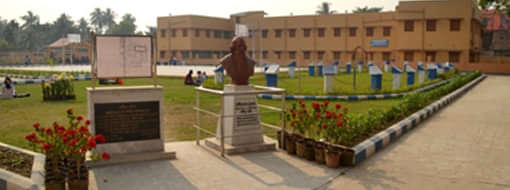
OfficialAcharya Prafulla Chandra College is a other institution in Kolkata, established in 1960. Acharya Prafulla Chandra College (APCC), established in 1906, is one of West Bengal's most prestigious institutions located in the heart of Kolkata. Named after the legendary scientist and freedom fighter Dr. Acharya Prafulla Chandra Ray, the college has a rich heritage of academic excellence spanning over a century. The institution is situated in Central Kolkata on Acharya Prafulla Chandra Road (formerly University Road), making it highly accessible yet maintaining a distinct academic environment despite urban surroundings. Academic Strengths and Programs: APCC offers undergraduate and postgraduate programs across Sciences, Commerce, and Humanities streams. The college is particularly renowned for its Physics and Chemistry departments, which have produced numerous accomplished scientists, researchers, and academicians. The undergraduate science curriculum is rigorous, emphasizing both theoretical knowledge and practical laboratory work. The college operates honors programs in subjects like Physics, Chemistry, Mathematics, Zoology, Botany, and Physiology at the undergraduate level. At the postgraduate level, it offers Master's programs in Physics, Chemistry, Mathematics, and select Commerce subjects. The curriculum follows the University of Calcutta's academic structure with regular updates to align with contemporary educational standards. Research and Academic Infrastructure: The college has established itself as a research hub with several well-equipped laboratories. The Physics department operates specialized labs for mechanics, optics, modern physics, and electronics. Chemistry labs include facilities for organic, inorganic, and physical chemistry research. The college library houses over 85,000 volumes with access to digital databases and journals. Faculty members are actively engaged in research, with APCC having generated multiple research publications in peer-reviewed national and international journals. Several faculty members hold positions in academic committees at university and state levels, reflecting the institution's academic standing. Placement and Career Outcomes: While APCC is primarily an undergraduate-focused institution, placement records show strong performance with around 65-70% of science graduates securing positions in education, research, pharmaceutical, and IT sectors. Many graduates pursue higher education at premier institutions like Indian Institute of Science (IISc), IIT campuses, and international universities. The college maintains an active placement cell, though placement statistics are notably lower than engineering-focused institutions. Many APCC alumni have established themselves in academia, research, banking, and civil services. Notable Alumni and Legacy: The college counts several distinguished alumni including renowned scientists, IAS/IPS officers, successful entrepreneurs, and academics. The institution's contribution to India's freedom struggle and early scientific renaissance is noteworthy—Dr. Acharya Prafulla Chandra Ray himself was a freedom fighter and pioneering chemist. Many alumni have gone on to lead research projects, educational institutions, and scientific organizations. Campus Life and Culture: APCC offers a vibrant campus life with numerous student clubs, cultural societies, and annual fests. The college celebrates Founders' Day, organizes inter-departmental competitions, and participates in inter-college festivals. Sports facilities include a gymnasium, cricket ground, and indoor games courts. The college has active cultural societies for drama, music, and fine arts. Student newspapers and magazines provide platforms for creative expression. However, as an urban institution with limited residential facilities, the campus culture is less residential-focused compared to sprawling campus colleges. Challenges and Realistic Perspective: The college faces constraints typical of historic urban institutions. Campus space is limited—approximately 8.5 acres in densely populated central Kolkata, restricting expansion of facilities. Hostel availability is severely limited, accommodating only around 200-250 students across both genders. The college operates without a substantial on-campus accommodation infrastructure, making it less suitable for out-of-station students unless they arrange private accommodation. The library, while well-stocked, operates on a traditional model with limited 24-hour study spaces. Faculty-student ratios in some departments can be high due to large class sizes. Transportation within Kolkata adds commute time for students living in distant localities. Who Should Apply: APCC is ideal for students seeking rigorous science and commerce education in a historically significant institution with strong academic foundations. It suits students from Kolkata or West Bengal's metro region who can commute daily or arrange accommodation independently. Students aspiring for academic careers, research, civil services, or higher studies at premier institutions will benefit from the college's research-oriented approach and faculty mentorship. The college is less suitable for students requiring extensive hostel facilities or those seeking primarily industry-focused placement outcomes. APCC attracts intellectually inclined students who value academic rigor and institutional legacy over modern infrastructure. The college's strength lies in its pedagogical approach, faculty expertise, and a century-long tradition of excellence in foundational sciences and liberal education, making it an excellent choice for serious undergraduate scholars.