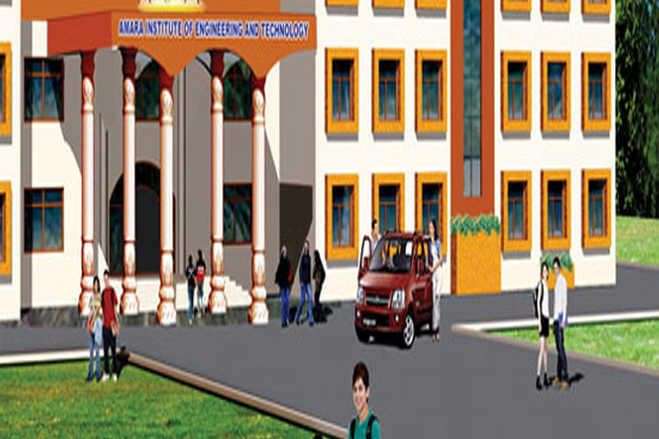
Amara Institute of Engineering & Technology
About
OfficialAmara Institute of Engineering & Technology is a other institution in Guntur, established in 2007. Amara Institute of Engineering & Technology (AIET) is a private engineering college located in Guntur district, Andhra Pradesh, established in 2001. The institution emerged during the growth phase of private engineering education in South India and has since positioned itself as a mid-tier engineering college serving primarily the Andhra Pradesh and Telangana regions. The college is situated approximately 35 kilometers from Guntur city on the Bangalore highway, placing it in a suburban setting with reasonable connectivity to urban centers. The college operates under the academic and regulatory framework of JNTU Kakinada (Jawaharlal Nehru Technological University), which governs most engineering institutions in coastal Andhra Pradesh. AIET offers undergraduate engineering programs across 8 disciplines including Civil, Mechanical, Electrical & Electronics, Electronics & Communication, Computer Science & Engineering, Information Technology, Chemical, and Biotechnology engineering. The undergraduate programs are 4-year full-time courses with annual intakes varying from 60 to 120 students per branch depending on AICTE approvals and demand trends. The college also offers a Master of Technology program in a few select branches including Digital Systems & Signal Processing and Structural Engineering, though the post-graduate infrastructure remains limited compared to undergraduate facilities. Academic Program Structure: AIET follows the semester-based system with 8 semesters for undergraduate programs. The curriculum emphasizes core engineering concepts in the first year, specialized branch courses from second year onwards, and includes industry-oriented projects and internship opportunities in the final year. The institution mandates a 6-week summer internship during the summer break following 3rd semester, and a comprehensive project during the 8th semester that typically involves collaboration with local industries or research organizations. The college has implemented outcomes-based education (OBE) methodology as per AICTE guidelines, though implementation quality varies across departments. Research & Innovation: AIET's research output remains modest compared to tier-1 institutions. The college has established a few departmental research centers, most notably in renewable energy and water resource management, which align with regional development priorities. Faculty engagement in research is minimal, with only about 12-15% of faculty members holding doctoral degrees, significantly below national averages for engineering colleges. The institution encourages student-driven projects through its Innovation and Incubation Cell, which received minor traction during COVID-19 but operates at limited capacity currently. Industry partnerships include tie-ups with a few regional manufacturing units and technology companies, primarily for project collaboration and guest lectures rather than substantive research partnerships. Placement Record: AIET reports a placement percentage of approximately 78-82% across programs for the 2023-24 academic year, which is reasonable but not exceptional for private engineering colleges in South India. The median package ranges from 4.5 to 5.5 lakhs per annum depending on the branch, with Computer Science and Information Technology branches commanding significantly higher packages (median 6.5-7.2 lakhs) compared to civil and mechanical branches (median 4.0-4.8 lakhs). The highest package reported in recent years is approximately 18-20 lakhs, typically in Computer Science, but this represents fewer than 3-5 students annually. Top recruiters include companies like TCS, HCL Technologies, Infosys, Wipro, Cognizant, KPMG, and various mid-sized IT consulting firms. However, the quality of placements has stagnated, with minimal growth in package increments over the past 5 years. Unplaced students typically find employment through campus drives conducted 2-3 months after graduation or pursue higher studies. Campus Infrastructure: The 45-acre suburban campus provides adequate space for academic and recreational facilities. The main academic building houses lecture halls equipped with basic audio-visual systems, though many projectors and systems are outdated. The college maintains 3 computer labs with approximately 250+ systems for Computer Science and IT students, with internet connectivity at 10 Mbps shared across labs, resulting in periodic slowdowns during peak usage. The library houses approximately 18,000 books with limited digital resources; access to premium journals like IEEE Xplore and Elsevier is available but underutilized due to poor awareness among students. The campus has a 500-seat auditorium used for convocations, seminars, and cultural events. Sports facilities include a basketball court, cricket ground, badminton courts, and a gymnasium with basic equipment. A health center staffed by a doctor and nurse is available during working hours. Hostel & Student Accommodation: The college operates separate hostels for boys and girls, accommodating approximately 1,100-1,200 students in total (roughly 40% of the student population). Boys' hostels have 4-6 seater rooms while girls' hostels predominantly feature 2-3 seater configurations. Hostel fees range from 35,000 to 50,000 per year depending on room occupancy and facilities. Mess facilities operate under college management with monthly charges around 2,500 per student. The quality of food is average with complaints about repetitive menus and occasional hygiene concerns. Hostel rooms have basic furniture (bed, chair, table, wardrobe) but lack air-conditioning in most blocks; only the newer girls' hostel block has AC facilities in a limited number of rooms. WiFi connectivity in hostels is sporadic and unreliable with frequent outages during evening hours when demand peaks. Off-campus accommodations near the college range from 2,500 to 6,000 per room in shared flats or paying guest arrangements, though availability is limited and finding accommodation requires 1-2 months advance planning. Campus Life & Culture: AIET maintains an active campus with regular cultural and technical fests. The annual flagship event "Amaavali" (cultural fest) occurs in February with performances, competitions, and food stalls; "Maverick" is the technical festival typically held in September featuring project exhibitions, technical talks, and hackathons. Student clubs exist across technical (robotics, coding, electronics), cultural (dance, music, drama), and sports domains, though club activities depend heavily on individual leaders' initiative rather than institutional support. The college has active chapters of professional organizations like IEEE and CSI. Gender distribution on campus is approximately 65% male and 35% female, skewed heavily toward engineering's traditional gender imbalance. Ragging incidents have been minimal in recent years with strict policies in place, though isolated incidents of verbal ragging during the first semester occasionally occur despite college efforts. The campus environment is generally safe for women with functional grievance redressal mechanisms, though cultural conservatism in the suburban setting means students must exercise typical precautions during late hours. Student Experience & Challenges: Students report that the college's suburban location, while providing a peaceful study environment, creates isolation from urban amenities and entertainment options. The nearest major city (Guntur) is 35 km away, and reaching it requires 45-60 minutes by auto-rickshaw or shared cab, making casual outings rare. Internet connectivity across campus is inconsistent; while the college claims 10 Mbps, actual speeds rarely exceed 4-6 Mbps during peak hours, creating frustration during online classes or remote internships. Academic quality varies significantly across departments, with CSE/IT departments having relatively stronger faculty and infrastructure compared to mechanical and civil branches. Teaching methodology remains predominantly lecture-based with limited emphasis on practical problem-solving and project-based learning, despite curriculum claims. Student feedback mechanisms exist but are rarely acted upon, creating a disconnect between student concerns and administrative responses. Who Should Apply: AIET is suitable for students seeking engineering education in Andhra Pradesh who have qualified for entrance through JEE Main and are unable to secure admission at NIT Warangal, NIT Rourkela, or IIIT Hyderabad but have reasonable JEE scores (typically rank 80,000-200,000). The college is particularly appropriate for students from Andhra Pradesh and Telangana regions due to regional familiarity, home proximity for many, and relatively lower transportation burden. Students prioritizing IT/CSE placements with reasonable expectations (5-7 lakhs package range) may find value here. The college is NOT recommended for students with ambitions toward research or academic careers, as faculty research opportunities are minimal. Students requiring top-tier infrastructure, world-class faculty, or exceptional placement outcomes should explore tier-1 institutions. The institution suits students who are self-motivated learners capable of supplementing college education with online resources (NPTEL, Coursera) to compensate for infrastructure and teaching limitations. Students uncomfortable with suburban settings far from urban entertainment should reconsider as the isolation impacts overall quality of life significantly.