Alpha Group Of Colleges
About
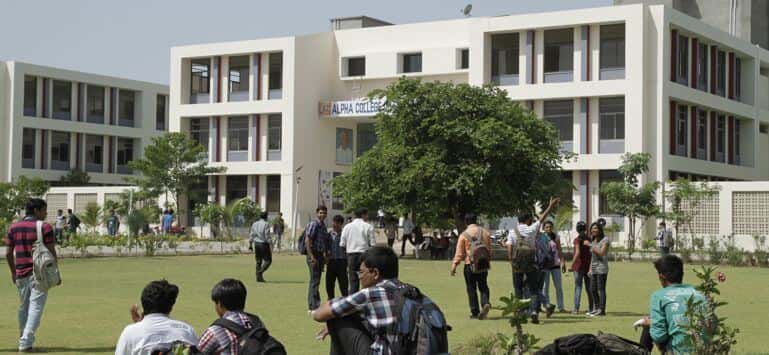
OfficialAlpha Group Of Colleges is a other institution in Gandhinagar, established in 2012. Alpha Group of Colleges (AGC) was established in 2001 as a private educational institution in Gandhinagar, Gujarat, positioned in the suburban outskirts of the state capital. The college emerged during the early 2000s private engineering boom in Gujarat and has gradually expanded its academic portfolio to include engineering, management, and science streams. Gandhinagar, being the state capital, provided a strategic location for the institution to attract students from across central Gujarat while maintaining proximity to industrial hubs in Ahmedabad. The founding vision was to provide quality technical education at affordable fees compared to metropolitan centers, though it positioned itself above government college baselines. Alpha Group operates with a focus on vocational skill development alongside traditional academics, reflecting the pragmatic approach common to mid-tier private colleges in Gujarat. The institution houses engineering programs in civil, mechanical, electrical, and information technology disciplines at the undergraduate level, with limited postgraduate offerings in engineering and business administration. The campus is relatively compact compared to top-tier engineering colleges, with facilities concentrated in a single academic block and auxiliary structures. Academic programs follow GUJCET and JEE Main-based admissions for engineering streams, with relatively accessible cutoff ranks in the 50,000-90,000 band for general category students. The college has invested moderately in laboratory infrastructure, with functional but aging equipment in core engineering labs. The management emphasizes industry-academia interface through occasional guest lectures and internship drives, though formal research centers are minimal. Campus life operates at a modest scale—the institution lacks the vibrant festival culture or extensive club infrastructure of top private colleges but maintains functional hostel facilities and basic sports amenities. Placements have shown gradual improvement, with 2023-24 reporting 68% placement rate, primarily in software services companies (TCS, Infosys, Wipro) and mid-tier IT firms, with average salary around 3.8-4.2 LPA. Manufacturing and core engineering placements remain weak, limiting opportunities for mechanical and civil engineering graduates. The student body comprises first-generation engineers from semi-urban backgrounds, Gujarati-medium school graduates transitioning to English medium, and students unable to secure seats in government colleges or top private institutions. Faculty comprises a mix of doctorate holders (40%) and industry professionals with limited research publication culture—faculty research output remains minimal with few indexed publications annually. The institution is NAAC accredited (B-grade, 2021) and holds NBA accreditation for some engineering programs but these certifications represent baseline compliance rather than excellence markers. Strengths include affordable fee structure, accessible cutoffs enabling social mobility, functional campus infrastructure adequate for undergraduate learning, and consistent placement in service sector jobs. Significant weaknesses include limited research culture, weak core engineering placements, outdated laboratory equipment, minimal industry partnerships with technology leaders, poor alumni engagement network, and reputation primarily as a 'college of last resort' for engineering aspirants. The college should appeal to students from lower-middle-class backgrounds seeking engineering degrees for IT service sector entry, those unable to clear JEE Main cutoffs for top colleges, and Gujarati-medium students requiring transition support to English medium instruction. It is NOT recommended for students seeking research exposure, innovation-focused learning, premier company internships, or strong foundational technical depth. The institution occupies the 'accessible but unremarkable' segment of Indian engineering colleges—neither known for innovation nor academic rigor, primarily serving credential-acquisition needs in the service sector. Student retention post-graduation is extremely poor given wage stagnation after 3-5 years in service roles; career growth typically plateaus unless students pursue further MBA education.