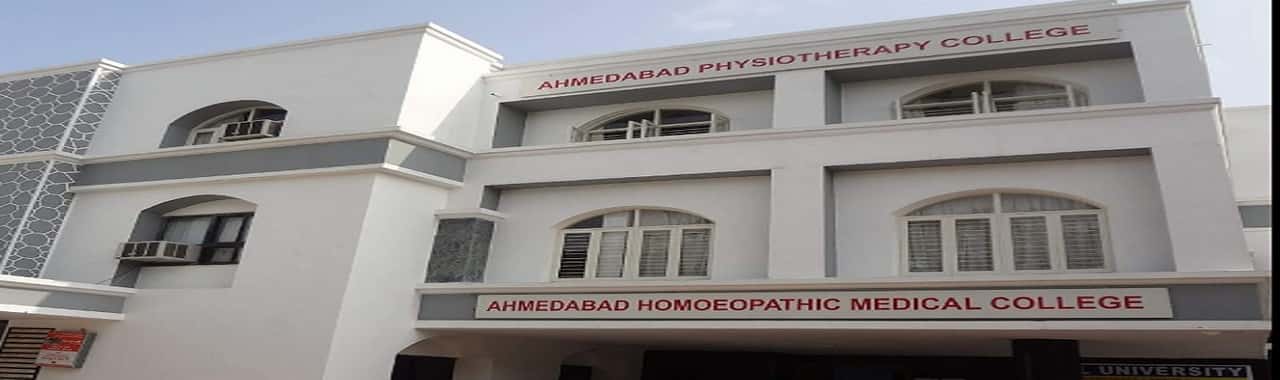
Ahmedabad Physiotherapy College
About
OfficialAhmedabad Physiotherapy College is a other institution in Ahmedabad, established in 2009. Ahmedabad Physiotherapy College (APC) was established in 2007 as a dedicated institution for physiotherapy education in Gujarat, India. The college emerged from the vision of providing quality healthcare professional training in the rapidly growing field of rehabilitation and physical therapy. Over the past 17 years, APC has positioned itself as a mid-tier physiotherapy institution catering primarily to students seeking BPT (Bachelor of Physiotherapy) and MPT (Master of Physiotherapy) degrees. The college is located in the suburban Thaltej area of Ahmedabad, strategically positioned between the city center and emerging healthcare clusters, providing students with reasonable proximity to both academic resources and clinical practice opportunities. The institution operates with a pragmatic approach to physiotherapy education, focusing on bridging the gap between theoretical knowledge and clinical application. The BPT program, which is the college's flagship offering, follows the INC (Indian Nursing Council) curriculum and spans 4.5 years including a 6-month internship. The college also offers an MPT program with specializations in Orthopedics and Neurology, designed for postgraduate candidates seeking advanced clinical expertise. Additionally, the college provides diploma-level courses in physiotherapy for students who may not meet BPT eligibility criteria, though these are less popular among the target demographic. Academically, APC emphasizes clinical training through affiliated hospitals and physiotherapy clinics across Ahmedabad. The college has partnerships with Apollo Hospitals, Sterling Hospital, and civil hospital chains, providing students with exposure to diverse patient populations and conditions. The faculty comprises qualified physiotherapists with masters degrees and clinical experience, though the college notably lacks PhD-level researchers or dedicated research centers. This means the institution is primarily teaching-focused rather than research-intensive, which is both a limitation and a realistic acknowledgment of its position in the education hierarchy. The campus infrastructure is modest but functional. The college operates from a rented building with dedicated lecture halls, a small library with approximately 3,000 physiology and pathology texts, well-equipped movement science and exercise therapy labs, electrotherapy labs, and a small student cafeteria. The campus does not feature hostels on-campus, which is a significant operational constraint for out-of-state students. The college heavily relies on nearby paying guest accommodations and shared flats in the surrounding Thaltej and Vastrapur neighborhoods. Placement outcomes have been historically variable. For the 2023-24 batch, approximately 78% of BPT graduates secured employment within 6 months, primarily through campus recruitment and personal networking. Median starting salaries range from 180,000 to 280,000 INR annually, with physical therapy clinics, hospitals, and rehabilitation centers being primary employers. However, salary growth in physiotherapy remains modest compared to other healthcare disciplines. Major employers include Apollo Hospitals, Fortis Healthcare, Sterling Hospital, Indian Railways, sports organizations, and international rehabilitation centers. Some graduates pursue further studies abroad or opt for entrepreneurial models by establishing independent clinics. The college's placement cell operates with basic efficiency—coordinating with local healthcare institutions and maintaining alumni networks. However, the reach is primarily regional, limiting placements in pan-India corporate healthcare chains or multinational rehabilitation companies. The college has not established strong international placement networks, though some MPT graduates have moved to Gulf countries for employment. Student life at APC is characterized by a close-knit community atmosphere with limited but functional extracurricular infrastructure. The college organizes an annual physiotherapy fest, sports day, and cultural activities, though these are modest in scale compared to larger metropolitan institutions. Student clubs focus primarily on clinical interest groups (orthopedic club, neurology discussion forum, sports physiotherapy group) rather than cultural societies. The college emphasizes a professional environment with regular clinical seminars, guest lectures from practicing physiotherapists, and case discussion sessions. Notable aspects include the college's emphasis on evidence-based practice, regular clinical skills workshops, and partnerships with sports organizations for student exposure to athletic rehabilitation. However, the college lacks cutting-edge research equipment, advanced digital learning platforms (though this is improving post-pandemic), and a vibrant campus culture compared to larger institutions. The student body is predominantly from Gujarat and neighboring states, with a growing proportion from other Indian states seeking specialized physiotherapy education in a cost-effective environment. The college attracts students who prioritize clinical training accessibility and placement in healthcare systems over research opportunities or prestigious institutional branding. Who should apply: Students genuinely passionate about patient care and clinical physiotherapy practice, seeking a practical, hands-on education in a supportive institutional environment. Students from Gujarat and western India seeking quality education without relocation burden. Those aiming for healthcare careers in hospitals, clinics, or rehabilitation centers rather than research academia. Students comfortable with modest campus infrastructure but committed to rigorous clinical training. Candidates seeking value-for-money education in physiotherapy with reasonable placement outcomes. The college is less suitable for students seeking global mobility immediately post-graduation, those prioritizing cutting-edge research exposure, or those requiring comprehensive on-campus residential facilities.