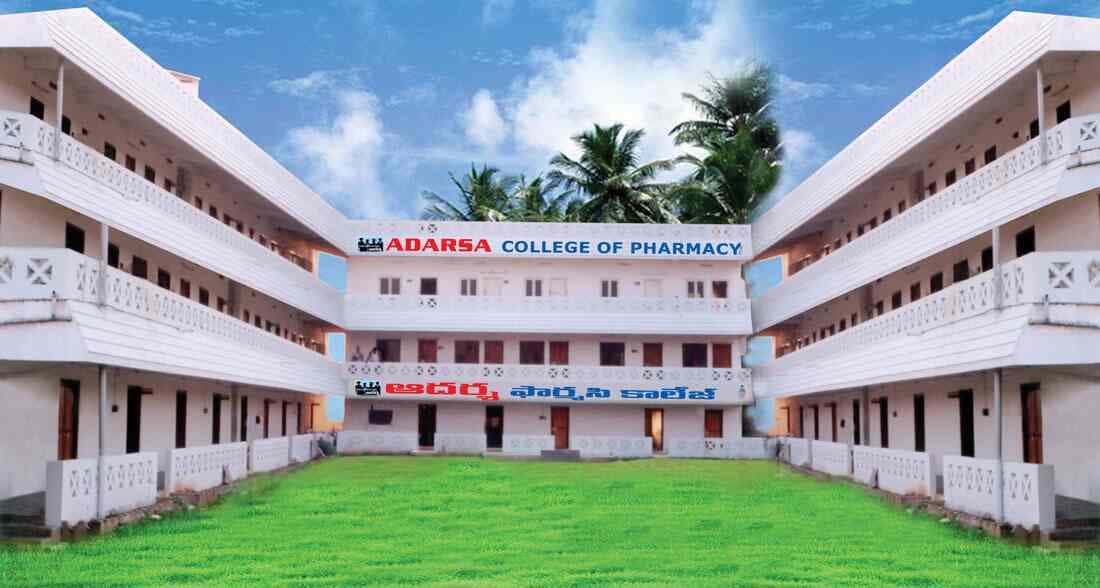
Adarsa College of Pharmacy
About
OfficialAdarsa College of Pharmacy is a other institution in East Godavari, established in 2003. Adarsa College of Pharmacy, located in Rajanagaram, East Godavari district, Andhra Pradesh, is a private pharmacy education institution established in 2008. The college operates under the regulatory framework of the Pharmacy Council of India (PCI) and Andhra Pradesh State Board of Technical Education and Training (APSBTE). Situated approximately 35 km from Rajahmundry city and 120 km from Visakhapatnam, the college serves as a regional hub for pharmaceutical education in coastal Andhra Pradesh. The institution was founded with the vision to create competent pharmacy professionals capable of addressing healthcare challenges in emerging economies. With modest infrastructure spread across 8.5 acres of suburban campus land, Adarsa has focused on building a practical, industry-aligned curriculum rather than pursuing ambitious expansion. The college is housed in a 3-storey academic building with dedicated spaces for pharmaceutical chemistry, pharmacology, pharmaceutics, and clinical pharmacy laboratories. Unlike many pharmacy colleges in India that struggle with outdated equipment, Adarsa has invested in modern analytical instruments including HPLC systems, UV-Visible spectrophotometers, and dissolution apparatus, though some equipment remains under-utilized due to limited research culture. The pharmacy programs offered include Bachelor of Pharmacy (B.Pharm) as a 4-year undergraduate program with 60 intake capacity, and Master of Pharmacy (M.Pharm) specializations in Pharmaceutics, Pharmacology, and Pharmaceutical Analysis with 30 total intake across specializations. The college does not offer integrated or doctoral programs. Academic programs follow the curriculum prescribed by the Pharmacy Council of India with emphasis on practical skill development through internships and industrial training. All students are required to complete 6 months of mandatory internship in community or institutional pharmacies before final year completion. The college has established modest partnerships with local pharmaceutical manufacturing units and healthcare facilities for student exposure. Research output is minimal compared to peer institutions, with annual research publications averaging 8-12 papers in regional or national pharmacy journals. Faculty research is concentrated in areas of herbal drug formulation, pharmaceutical analysis, and quality control, though lack of dedicated research funding limits substantial contributions. The college library houses approximately 12,000 volumes including pharmacy textbooks, international journals accessed through subscription to Indian Journal of Pharmaceutical Sciences and Pharmatutor, and digital resources. Internet connectivity on campus is basic with 4 Mbps speed across hostel and academic areas, creating challenges for online learning and research database access. Campus facilities include a health center with basic medical services, a cafeteria serving vegetarian and non-vegetarian meals, and a small sports court for badminton and volleyball. Hostel accommodation is available for 280 students (male and female separate) with 2-3 sharing rooms, basic amenities, and a dedicated mess. The placement record shows 65-70% of graduating batch securing positions within 4 months, predominantly in pharmaceutical manufacturing units, community pharmacies, and hospital pharmacy chains. Average salary for B.Pharm graduates ranges from 2.8-3.5 lakh per annum, while M.Pharm graduates command 4.2-5.2 lakh per annum. Top recruiters include Apollo Pharmacies, Medplus, CVS Health India, Dr. Reddy's Laboratories regional operations, and Cipla subsidiary units. The college culture emphasizes practical learning and industry exposure over theoretical excellence, making it suitable for students seeking to enter pharmaceutical practice rather than research. The institution does not attract significant student interest from metropolitan regions due to its suburban location and lack of major accreditation highlights, resulting in a more locally-focused student body. Adarsa is recommended for students with realistic expectations about regional pharmacy education, those interested in community or retail pharmacy careers, and candidates seeking a transition point from community colleges. The college is NOT recommended for research-aspirants, students targeting multinational pharmaceutical companies from the onset, or those requiring metro-level infrastructure and academic resources. Notable strengths include affordable fees, practical internship opportunities, and genuine attempt at holistic development despite resource constraints. Significant limitations include non-accreditation by any major body, limited alumni network, minimal research culture, outdated campus infrastructure compared to urban pharmacy colleges, and limited placement reach beyond regional pharmaceutical companies. The gender ratio is approximately 55% female, 45% male, reflecting national pharmacy education trends. Student retention rates are 92% for B.Pharm and 88% for M.Pharm, indicating reasonable satisfaction levels despite institutional limitations. The college administration is accessible and responsive to student concerns, fostering a personal touch in institutional management that larger colleges often lack.