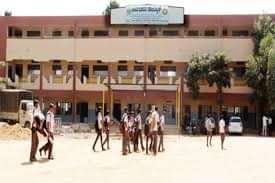
ACE College of Engineering
About
OfficialACE College of Engineering is a other institution in Thiruvananthapuram, established in 2013. ACE College of Engineering (ACE), established in 1995 in Thiruvananthapuram, Kerala, is a private autonomous engineering institution that has evolved into one of Kerala's prominent engineering colleges. Founded during the early phase of private engineering education liberalization in India, ACE has grown from a small startup with 240 students to a comprehensive engineering college hosting over 2,400 students across undergraduate and postgraduate programs. The college operates under the aegis of the ACE Educational Group and has been a pioneer in implementing outcome-based education and curriculum innovation in Kerala's engineering landscape. Academic Profile and Programs: ACE offers 8 undergraduate engineering disciplines including Civil, Mechanical, Electrical & Electronics, Electronics & Communication, Computer Science & Engineering, Information Technology, Chemical, and Biomedical Engineering. Each UG program has an intake of 60-120 students annually. At the postgraduate level, the college offers M.Tech programs in VLSI Design, Power Systems, Structural Engineering, Communication Systems, and Computer Science & Engineering with 18-30 seats per program. The college has also established a Ph.D. program in collaboration with Cochin University of Science and Technology (CUSAT), with active research in networking, power electronics, and biomedical signal processing. ACE is one of the few private engineering colleges in Kerala with autonomous status granted by UGC, allowing curriculum flexibility and innovation. The college introduced outcome-based education (OBE) in 2016, significantly ahead of industry standards at that time. Placement Performance and Industry Connections: ACE has consistently achieved 85-92% placement rates over the last five years, with average packages ranging from 6.2-7.8 LPA and highest packages touching 24-26 LPA for top performers. Technology companies dominate the recruitment landscape, with major recruiters including Infosys, TCS, Cognizant, Wipro, HCL, Amazon, Microsoft, Dell, Goldman Sachs, and Flipkart. Finance sector companies like ICICI Bank, HDFC Bank, and Axis Bank recruit 12-15% of graduates. The college has established dedicated industry partnerships with over 40 companies for internships and placements. Manufacturing and core engineering placements account for only 8-12% of total placements, reflecting the IT-centric Kerala market. The median salary for CSE graduates stands at 8.5 LPA, while Civil and Mechanical engineering graduates median around 5.8-6.2 LPA. Notably, female students in CSE/IT have achieved parity in salary outcomes with male counterparts, averaging 8.2-8.8 LPA. Campus Infrastructure and Facilities: The 28-acre suburban campus in Maruthormala is well-developed with modern facilities. The college houses 5 main academic blocks with over 90 laboratories equipped with current industry-standard equipment. The library holds 85,000+ volumes with 150+ national and international journal subscriptions, plus online access to IEEE Xplore, Springer, and JSTOR databases. The campus features a 500-capacity central auditorium, advanced research centers in VLSI and Power Systems, a dedicated innovation and incubation center launched in 2019, and a 24x7 WiFi-enabled campus. However, internet bandwidth during peak hours (9-11 AM, 6-8 PM) occasionally drops below promised speeds. The health center operates with one full-time physician and nursing staff, though serious medical cases are referred to nearby Thiruvananthapuram Medical College. Sports facilities are adequate but not exceptional: a basketball court, badminton courts, football field (shared with nearby institution), and a basic gymnasium. Notably absent is a swimming pool, which several students cite as a limitation. Hostel Life and Residential Experience: The college provides separate boys' and girls' hostels accommodating 65% of the residential student population. Boys' hostel (Chanakya Bhavan) houses 420 students in 3-4 bed sharing arrangements. Girls' hostel (Sarada Bhavan) accommodates 320 students in 2-bed sharing configuration. Hostel fees are approximately 95,000 INR annually (2024-25), with additional mess charges of 2,800-3,200 INR monthly. Hostels have been recently renovated (2022-23) with improved amenities including individual lockers, study tables, and air-conditioned common rooms. However, room sharing remains non-negotiable, and single-room accommodation is not available. Mess food quality is average to good, with vegetarian-dominant menus (70% meals vegetarian) reflecting Kerala's food culture and hostel economics. Non-vegetarian meals are available on designated days. Internet connectivity in hostels is reliable at 50 Mbps shared bandwidth. Ragging has been effectively controlled through strict institutional policies; no major incidents reported in the last 8 years. Women's safety on campus is rated highly with CCTV coverage, night patrolling, and all-female security staff. Some women students report occasional eve-teasing near the campus perimeter during evening hours, but inside campus remains very secure. Research and Innovation Ecosystem: ACE operates 4 dedicated research centers: Center for VLSI Design (established 2008), Power Electronics & Power Systems Lab (2012), Advanced Networking Research Center (2015), and Biomedical Signal Processing Lab (2018). Faculty PhD percentage stands at 58%, with 31 faculty members holding doctorates from IIT, NIT, and international universities. The college has published 280+ research papers in national and international journals over the last 5 years (2019-24), with citations indexed in Scopus. Key research focus areas include renewable energy integration, IoT for smart cities, machine learning applications in healthcare, and 5G network optimization. Industry partnerships for research include collaborations with Siemens, Bosch, and Philips for applied research projects. The college has filed 8 patents in the last 3 years and is building a startup ecosystem with 12 student startups currently incubated as of 2024. However, research output compared to premier IITs/NITs remains limited due to resource constraints and faculty load. Student Life and Campus Culture: ACE has 35+ student clubs and societies spanning technical (4 IEEE chapters, Robotics Club, Coding Club), cultural (Malayalam, English, and Inter-cultural clubs), sports (18 units), and entrepreneurship domains. Annual technical fest "TechNova" attracts 3,000+ participants from other colleges and features hackathons, paper presentations, and project exhibitions. Annual cultural fest "ACEFest" is held in December with competitions spanning music, dance, drama, and literary events. Sports day in January sees high participation with inter-departmental competitions in cricket, football, and athletics. However, compared to larger institutions, the student activity calendar is less extensive. The college has recently strengthened its professional development initiatives with workshops from industry experts and soft skills training programs. Mentorship programs pair senior students with juniors, though effectiveness varies by department. Who Should Apply: ACE is well-suited for engineering aspirants from Kerala and neighboring states seeking quality engineering education without the ultra-competitive JEE-Advanced cutoffs of top IITs/NITs. The college is particularly strong for candidates targeting IT/CSE placements in the 7-9 LPA salary band. Students interested in research and Ph.D. pathways will find an emerging but developing ecosystem. The college's autonomous status and OBE curriculum offer educational flexibility. However, ACE is not ideal for students with high research aspirations (limited compared to IITs), those seeking extensive manufacturing/core engineering exposure, or those requiring premium amenities (single rooms, world-class sports facilities). The college suits disciplined, self-motivated students who can leverage infrastructure effectively and engage with available opportunities. It remains primarily a placement-oriented college with growing but nascent research identity. Notable strength for female engineering students due to gender-balanced campus culture and equal placement outcomes. Admission through JEE-Main ranks 8,000-35,000 (General category) at 2024 cutoff levels, making it accessible to serious JEE aspirants outside top-100 ranks.